
Choosing the best flooring for living room spaces is one of the most important decisions when designing or renovating a home. The living room is often the central gathering place where families relax, entertain guests, and spend a significant amount of time together. Because of this, the flooring needs to combine durability, comfort, and visual appeal. Materials such as wood flooring, carpet flooring, and vinyl flooring are widely used because they balance performance with style. Each flooring material offers unique advantages depending on your lifestyle and design preferences.
Hardwood flooring delivers timeless elegance, carpet flooring provides softness and warmth, while luxury vinyl flooring offers impressive durability and easy maintenance. Understanding these materials helps homeowners evaluate the best living room flooring options based on factors like daily foot traffic, interior style, and maintenance needs. In this guide, we compare the leading flooring materials to help you identify the best flooring for living room environments.
Why Does Living Room Flooring Matters?
The living room is one of the most frequently used spaces in a home, which makes choosing the best flooring for living room areas especially important. This room often serves as the main gathering place where families relax, watch television, and entertain guests. Because of this constant activity, the flooring must handle daily foot traffic, potential spills, and general wear and tear while still maintaining its appearance. Beyond durability, flooring also plays a major role in shaping the room’s overall design.
The colour, texture, and material of the floor influence how living room furniture, lighting, and décor come together. Whether you prefer the warmth of wood flooring, the softness of carpet flooring, or the practicality of vinyl flooring, the right surface can transform the atmosphere of the space. By carefully selecting best flooring for living room environments, homeowners can achieve a balance between durability, comfort, and long-lasting style.
Key Factors When Choosing Living Room Flooring
When selecting the best flooring for living room spaces, several practical factors should guide your decision. Living rooms typically experience consistent foot traffic, furniture movement, and daily activity, so the floor must be strong enough to handle long-term use while still maintaining visual appeal. Choosing durable flooring for living room areas ensures the surface can resist scratches, stains, and general wear without losing its finish. Comfort is another key consideration. Many homeowners prefer flooring that feels pleasant underfoot, especially in spaces designed for relaxation.
Durability and Foot Traffic
One of the most important considerations when choosing the best flooring for living room spaces is durability. Living rooms usually experience frequent activity, including daily foot traffic, moving furniture, and gatherings with family or guests. Because of this, the flooring must be able to withstand wear and tear without losing its appearance over time. Materials such as vinyl flooring, engineered wood flooring, and high-quality laminate flooring are often selected because they provide strong scratch resistance and long-lasting performance.
Durability becomes even more important in homes with pets or children, where floors may experience additional stress from spills, toys, or pet claws. Flooring with a strong protective wear layer or dense construction helps maintain its finish while reducing visible damage. By prioritising durability, homeowners can ensure their living room floor remains attractive and functional for many years.
Comfort and Feel Underfoot
Comfort is another essential factor when selecting the flooring for living room environments. Since living rooms are designed for relaxation and socialising, the flooring should feel comfortable underfoot and contribute to a welcoming atmosphere. Soft surfaces such as carpet flooring provide excellent cushioning and sound absorption, making them ideal for spaces where comfort and quietness are important.
Hard surfaces like wood flooring and vinyl flooring can also provide comfort when paired with area rugs, which add warmth and texture to the room. Additionally, many modern flooring systems are compatible with underfloor heating, helping maintain a pleasant temperature during colder months. Choosing a floor that balances comfort with durability ensures that the living room remains both practical and inviting for everyday use.
Maintenance and Cleaning
Maintenance requirements are another key factor when determining the best flooring for living room areas. Some materials require more care than others, and understanding these needs can help homeowners select a floor that fits their lifestyle. Wood flooring, for example, may occasionally need refinishing to restore its surface after years of use. While it is durable, maintaining its appearance requires periodic care.
In contrast, vinyl flooring and laminate flooring are known for their easy maintenance. These surfaces typically require simple sweeping and occasional mopping to keep them clean. Many modern floors also feature stain-resistant surfaces and durable protective coatings, which make them easier to maintain in busy households. Choosing flooring with manageable maintenance requirements helps ensure the living room remains attractive without demanding excessive time or effort.
Style and Interior Design Compatibility
The visual style of a floor plays a major role in identifying the flooring for living room spaces. Flooring serves as the foundation of the room’s overall design, influencing how furniture, lighting, and decorative elements come together. Materials such as hardwood flooring provide a timeless appearance with natural wood grain patterns, while vinyl plank flooring can mimic wood, stone, or tile textures.
Colour and pattern choices also affect how spacious and inviting the room feels. Lighter flooring tones often make a room appear larger and brighter, while darker shades can add depth and elegance. Popular patterns such as herringbone or chevron flooring introduce visual interest and create a more distinctive design. Selecting flooring that complements the existing décor ensures the living room feels cohesive, stylish, and comfortable.
Wood Flooring for Living Rooms
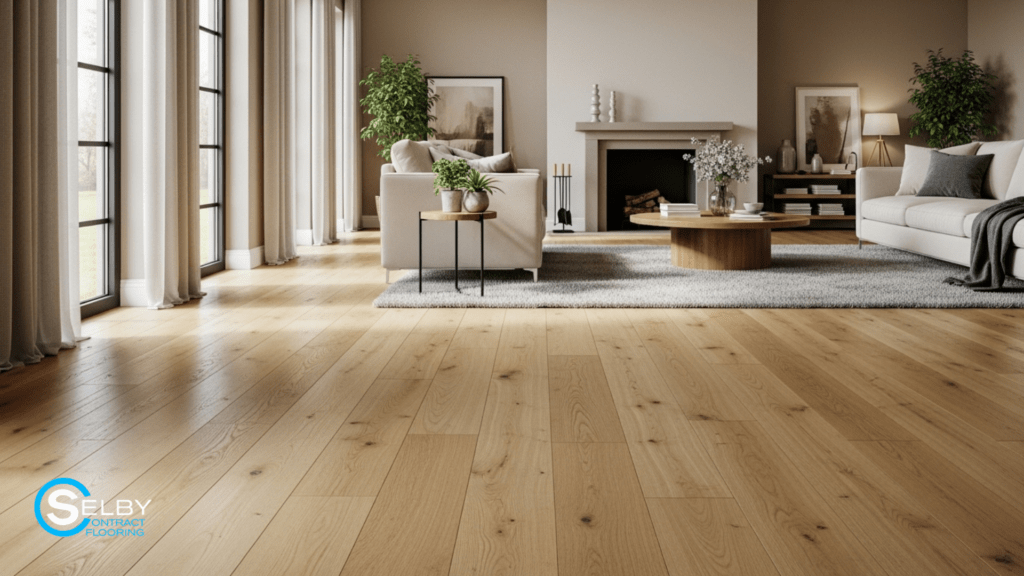
Among the many choices available, wood flooring remains one of the most elegant solutions when selecting the best flooring for living room spaces. Known for its natural beauty and long lifespan, wood flooring adds warmth and character to interiors while complementing a wide range of décor styles. Options such as solid hardwood flooring and engineered wood flooring provide homeowners with durable surfaces that can last for decades with proper care.
One of the biggest advantages of wood flooring is its ability to be sanded and refinished, allowing the surface to maintain its appearance even after years of use. The natural wood grain, rich tones, and sturdy wooden planks create a timeless aesthetic that works well in both traditional and modern living rooms. Additionally, wood flooring is compatible with area rugs and even underfloor heating, adding flexibility to interior design. Because of its durability and classic appeal, many homeowners consider wood a strong candidate for the best flooring for living room settings.
Carpet Flooring for Living Rooms
For homeowners seeking comfort and warmth, carpet flooring remains a classic choice when considering the best flooring for living room spaces. Carpets create a soft and welcoming atmosphere that makes living areas feel more relaxing and comfortable. The cushioned surface provides excellent sound absorption, helping reduce noise in busy households while also offering a warm texture underfoot. Carpet is available in a wide variety of materials, including nylon, polyester, and wool carpet, each offering different levels of durability and softness.
Because of its ability to create a cozy environment, carpet is often preferred in homes where comfort is a priority. However, when comparing wood vs carpet for living room designs, it is important to consider maintenance needs, as carpets may require more frequent cleaning to manage stains and everyday wear. Despite this, carpet remains a strong contender for living room environments focused on comfort.
Vinyl Flooring for Living Rooms
Vinyl flooring has become a modern and practical solution for homeowners searching for the best flooring for living room spaces. Designed for durability and convenience, vinyl floors are built with multiple layers, including a strong core layer and a protective wear layer that helps resist scratches, stains, and everyday damage. These qualities make vinyl a reliable option for active households. One of the biggest advantages of vinyl is its versatility.
Products such as Luxury Vinyl Tile (LVT) and vinyl plank flooring can realistically replicate the look of natural wood, stone, or ceramic tile. This allows homeowners to achieve stylish interiors without the higher costs often associated with natural materials. Vinyl flooring is also easy to clean and maintain, making it suitable for spaces with frequent activity. Because of its durability, affordability, and low maintenance, many homeowners now consider vinyl among the most popular flooring for living rooms in modern homes.
Wood vs Carpet vs Vinyl Comparison
When comparing the best flooring for living room spaces, many homeowners focus on three major materials: wood flooring, carpet flooring, and vinyl flooring. Each option offers unique benefits depending on lifestyle, design preferences, and maintenance expectations. Understanding the strengths of each material makes it easier to decide which surface will work best in a busy living space. Wood flooring is valued for its natural appearance, durability, and ability to increase property value. However, it usually requires a higher investment and occasional refinishing.
Carpet flooring delivers exceptional comfort and sound absorption, creating a cozy environment that works well in relaxation areas. On the other hand, vinyl flooring, especially Luxury Vinyl Tile (LVT), is known for its scratch resistance, easy cleaning, and affordable pricing. Comparing durability, comfort, maintenance, and cost helps homeowners determine the flooring for living room areas based on their daily needs and interior style.
Living Room Flooring Design Ideas
Exploring creative living room flooring ideas can help homeowners design a stylish and functional space while selecting the best flooring for living room areas. Flooring sets the visual foundation of the room, influencing how furniture, lighting, and décor elements work together. Choosing the right material and pattern can significantly enhance the atmosphere of a living space. One popular approach is using wide plank wood flooring, which creates a spacious and elegant appearance.
Many homeowners also combine hardwood flooring with area rugs to introduce texture and warmth while protecting high-traffic areas. Another modern option is vinyl plank flooring that mimics the look of natural wood grain while offering greater durability and easier maintenance. Patterns such as herringbone or chevron flooring can add visual interest to larger rooms, while neutral colours help maintain a balanced interior style. These ideas make it easier to design a comfortable and visually appealing living room.
Which Flooring Is Best for Your Living Room?
Choosing the best flooring for living room spaces ultimately depends on lifestyle, design preferences, and practical requirements. Living rooms often experience regular activity, so the flooring must balance durability with comfort and visual appeal. By comparing materials such as wood flooring, carpet flooring, and vinyl flooring, homeowners can determine which surface best suits their household needs. For example, families with pets or children often prefer flooring with strong scratch resistance and easy maintenance.
In these situations, vinyl flooring or Luxury Vinyl Tile (LVT) can provide a practical solution. Homeowners who want a more luxurious and natural appearance may choose hardwood flooring, which adds timeless elegance and long-term value. Meanwhile, carpet flooring works well in living rooms focused on comfort and warmth. Evaluating traffic levels, cleaning requirements, and interior design style will help homeowners confidently select the best flooring for living room environments.
Final Thoughts
Selecting the best flooring for living room spaces requires balancing durability, comfort, and style. Because the living room is one of the most active areas of a home, the flooring must withstand daily use while still contributing to the room’s overall design. Materials such as wood flooring, carpet flooring, and vinyl flooring each offer unique advantages depending on household needs and personal preferences. For homeowners seeking timeless elegance and long-term value, hardwood flooring remains a premium option. Those who prioritise softness and warmth often prefer carpet flooring, while families looking for practicality and easy maintenance frequently choose vinyl flooring or Luxury Vinyl Tile (LVT). Each option provides different levels of durability, comfort, and visual appeal.
Frequently Asked Questions
What is the best flooring for a living room?
The best flooring for living room spaces depends on your lifestyle, budget, and design preferences. Popular choices include wood flooring, carpet flooring, and vinyl flooring. Wood offers a timeless appearance, carpet provides warmth and comfort, while vinyl is known for its durability and easy maintenance in busy households.
Is wood flooring better than carpet in living rooms?
Both options have advantages. Wood flooring provides a classic and long-lasting surface that enhances interior style, while carpet flooring offers softness and excellent sound absorption. The best option often depends on whether you prioritize durability and style or comfort and warmth.
Is vinyl flooring suitable for living rooms?
Yes, vinyl flooring is a practical choice for living rooms. Modern options like Luxury Vinyl Tile (LVT) are designed with strong wear layers that resist scratches, stains, and everyday wear. Vinyl also mimics the look of natural wood or stone, making it a versatile flooring solution.
Which flooring lasts the longest in a living room?
In terms of longevity, hardwood flooring typically lasts the longest when properly maintained because it can be sanded and refinished multiple times. Vinyl flooring and laminate flooring are also durable options designed to withstand heavy foot traffic in active living spaces.
How do I maintain living room flooring?
Maintaining the best flooring for living room areas involves regular cleaning and protective care. Sweeping or vacuuming removes dirt that can cause scratches, while using area rugs in high-traffic zones helps protect the surface. Following manufacturer care guidelines ensures flooring materials stay attractive and durable for years.