
Choosing the right flooring is one of the most important decisions when upgrading your home interior. Many homeowners find themselves comparing carpet vs laminate flooring because both options offer affordability, style variety, and practical benefits for everyday living. Each flooring type creates a different atmosphere, from the soft warmth of carpet flooring to the modern, wood-like appearance of laminate flooring. When evaluating carpet vs laminate flooring, it’s important to consider factors such as comfort, durability, maintenance, and how each floor performs in different rooms.
Carpet fibers provide insulation and noise reduction, making them popular in relaxing spaces like bedrooms. Meanwhile, laminate planks are known for their scratch-resistant wear layer, easy cleaning, and stylish designs that mimic hardwood flooring. Understanding the key differences between carpet and laminate flooring can help homeowners choose a flooring solution that fits their lifestyle, budget, and interior design goals.
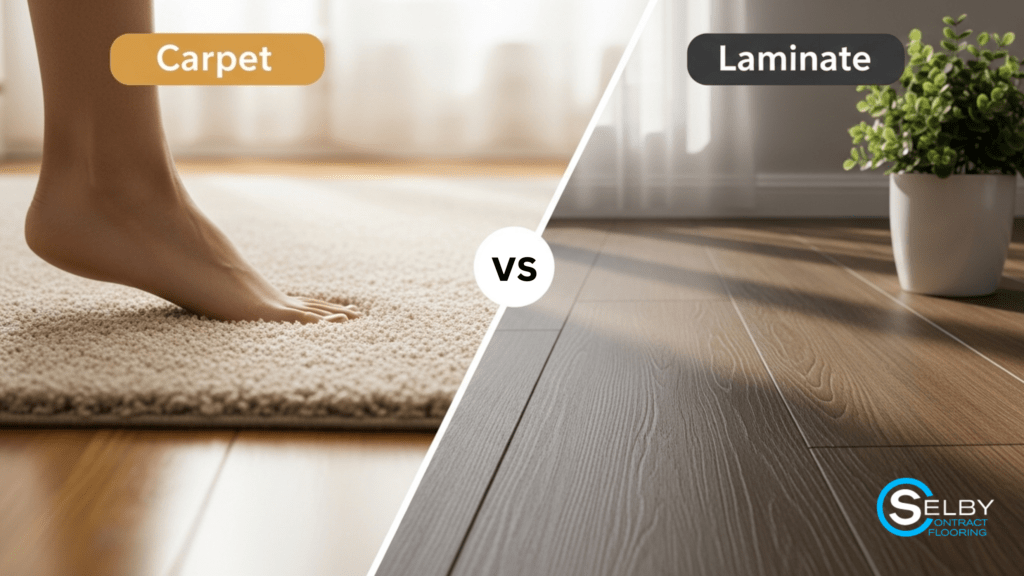
Carpet vs Laminate Flooring Overview
Understanding the basics of carpet vs laminate flooring helps homeowners compare how each option performs in daily life. Carpet flooring is a soft textile surface made from materials such as nylon, polyester, or wool fibers. The upper carpet pile is attached to a durable backing and typically installed with carpet padding, which adds comfort and insulation underfoot. In contrast, laminate flooring is a multi-layer synthetic flooring system designed to replicate the appearance of wood, stone, or tile surfaces.
Each plank usually includes a high-density fiberboard (HDF) core, a decorative design layer, and a protective melamine wear layer that improves durability. When comparing carpet vs laminate flooring, installation also differs. Carpet is usually stretched and secured to the subfloor, while laminate planks use a click-lock floating system that connects boards together without glue or nails.
Carpet vs Laminate Flooring Pros and Cons
When comparing carpet vs laminate flooring pros and cons, it’s important to consider how each material performs in everyday living spaces. In the broader carpet vs laminate flooring debate, both options offer unique benefits depending on comfort preferences, maintenance expectations, and household lifestyle. Carpet flooring is known for its warmth and softness. The cushioned carpet pile and carpet padding provide excellent sound insulation, making it ideal for quiet spaces such as bedrooms or family rooms.
Pros of Carpet Flooring
Comfort and Warmth
One of the most significant benefits of carpet flooring is the level of comfort it provides. The soft carpet pile combined with thick carpet padding creates a cushioned surface that feels gentle underfoot. This makes carpet especially appealing in areas where people frequently walk barefoot, such as bedrooms, family rooms, or living spaces. Unlike hard flooring, carpet also retains warmth, making rooms feel more comfortable during colder seasons. This added warmth can improve the overall coziness of a home, particularly in climates where floors tend to feel cold.
Noise Reduction
Carpet is widely known for its excellent sound absorption qualities. The dense carpet fibers and padding underneath help reduce noise created by footsteps, furniture movement, and everyday activity. In multi-story homes or apartments, carpet can significantly reduce sound transfer between floors. This makes it a popular flooring choice for upstairs bedrooms, hallways, and shared living areas where maintaining a quieter environment is important.
Thermal Insulation
Another advantage of carpet is its ability to provide thermal insulation. Carpet helps trap warm air within a room and prevents heat loss through the floor. This natural insulating property can contribute to a more energy-efficient home by helping maintain indoor temperatures during colder months. As a result, homeowners may experience improved comfort and potentially lower heating costs.
Wide Variety of Styles
Carpet offers an extensive range of colors, textures, patterns, and pile heights, allowing homeowners to match their flooring with almost any interior design style. Whether you prefer a luxurious plush carpet, a durable loop pile carpet, or modern carpet tiles, there are many options available. This versatility makes carpet an attractive flooring choice for people who want to create a specific aesthetic or personalize their living space.
High Durability
One of the main advantages of laminate flooring is its durability. Laminate planks are manufactured with a strong protective wear layer that resists scratches, dents, and stains. This makes laminate an excellent option for homes with pets, children, or areas that experience frequent foot traffic. The durable surface helps maintain the floor’s appearance for many years with minimal damage.
Easy Maintenance
Laminate floors are relatively easy to maintain compared to carpet. Because the surface is smooth and sealed, dirt and debris remain on top of the floor rather than becoming trapped within fibers. Routine sweeping, vacuuming, or dry mopping is usually sufficient to keep laminate floors clean. Spills can also be wiped away quickly, making laminate a convenient flooring option for busy households.
Modern Wood-Like Appearance
Laminate flooring is designed to replicate the appearance of natural materials such as hardwood, stone, or ceramic tile. Modern manufacturing techniques allow laminate planks to feature highly realistic wood grain patterns, textures, and finishes. This allows homeowners to achieve the aesthetic appeal of premium flooring materials without the high cost associated with solid wood or natural stone.
DIY-Friendly Installation
Most laminate flooring products are designed with a click-lock installation system that allows planks to snap together without glue or nails. This floating floor design makes laminate flooring easier to install compared to many traditional flooring types. Many homeowners choose laminate for DIY flooring projects because the installation process is relatively quick and requires minimal specialized tools.
Cons of Laminate Flooring
Harder Surface
Unlike carpet, laminate flooring has a firm and solid surface. While this makes it durable, it can also feel harder underfoot, especially when standing for long periods. This may reduce comfort in areas where people spend a lot of time standing, such as kitchens or workspaces.
Noise When Walking
Because laminate is a hard flooring surface, footsteps and movement can create noticeable sound. Without proper acoustic underlay, laminate flooring may produce a hollow or echo-like sound when walked on. Installing an appropriate underlayment can help reduce noise, but laminate will generally remain louder than carpet.
Moisture Sensitivity
Although some laminate flooring products offer limited moisture resistance, they are still vulnerable to prolonged exposure to water. If water seeps into the seams between planks, it can damage the fiberboard core and cause the flooring to swell or warp. For this reason, laminate is not always recommended for areas with high humidity or frequent water exposure.
Stain and Dirt Absorption
One of the biggest disadvantages of carpet is its tendency to trap dust, pet hair, allergens, and spills. Because the fibers absorb liquids easily, stains can become difficult to remove if they are not cleaned immediately. Homes with pets, children, or heavy foot traffic may experience faster wear and staining, which can affect the carpet’s appearance over time.
Higher Maintenance Requirements
Carpets require more regular maintenance than many hard flooring options. Routine vacuuming is necessary to remove dirt and debris from the fibers. In addition, carpets often require deep cleaning, steam cleaning, or professional cleaning services once or twice a year to maintain hygiene and extend their lifespan. Without proper maintenance, carpets may develop odors or lose their original appearance.
Shorter Lifespan
Compared to some hard flooring options, carpet generally has a shorter lifespan. Most standard carpets last between 5 to 10 years, depending on the material quality and the amount of foot traffic they experience. High-quality carpets made from durable materials such as nylon fibers can last longer, but they will still eventually show signs of wear, such as flattening, fading, or staining.
Which Is Better Carpet or Laminate flooring?
When homeowners ask which is better carpet or laminate flooring, the answer often depends on lifestyle, room function, and personal preference. In the broader comparison of carpet vs laminate flooring, each material performs differently depending on how the space is used. For households with children or pets, laminate flooring may be a more practical option. The durable wear layer resists scratches and stains, making it easier to maintain in high-traffic areas like living rooms or hallways.
Laminate also works well in spaces where spills are more likely. However, carpet flooring is often preferred in rooms where comfort matters most. The soft carpet fibers and cushioned underlay provide warmth and reduce noise, creating a cozy environment. Ultimately, deciding between carpet vs laminate flooring depends on balancing comfort, durability, and maintenance needs in your home.
Cost of Carpet vs Laminate Flooring
When comparing the cost of carpet vs laminate flooring, homeowners should consider both material prices and installation expenses. In most cases, the overall price will vary depending on the quality of materials, room size, and whether you hire professional installers. Within the broader carpet vs laminate flooring comparison, both options are generally more affordable than hardwood flooring or natural stone floors. Standard carpet flooring typically costs between £2 and £10 per square foot, depending on the type of carpet fibers and carpet padding used.
Installation costs may increase if the subfloor requires repairs or additional preparation. Meanwhile, laminate flooring usually ranges from £3 to £11 per square foot installed. Many laminate products feature a click-lock installation system, making them suitable for DIY flooring projects, which can help reduce labour costs. Overall, evaluating carpet vs laminate flooring costs involves balancing initial price with durability and long-term value.
Carpet vs Laminate Flooring Durability
When comparing carpet vs laminate flooring durability, lifespan, and resistance to daily wear are important factors. In most homes, the durability of a floor depends on foot traffic, maintenance habits, and the quality of the materials used. Within the overall carpet vs laminate flooring comparison, laminate generally lasts longer because of its protective surface layers. Average carpet flooring can last around 5 to 10 years, although high-quality carpets made from durable nylon fibers may last up to 15 years with proper care.
However, carpets are more vulnerable to stains, moisture, and wear in high-traffic areas such as hallways. By contrast, laminate flooring often lasts 15 to 25 years because of its tough melamine wear layer and sturdy HDF core. This protective structure helps laminate resist scratches, dents, and everyday damage more effectively than most carpet materials.
Maintenance and Cleaning Comparison
Maintenance is another important factor when evaluating carpet vs laminate flooring. Each flooring type requires a different cleaning routine to maintain appearance and hygiene. Understanding these differences helps homeowners choose a floor that fits their daily lifestyle and cleaning habits. Carpet flooring usually requires regular vacuum cleaning to remove dust, pet hair, and allergens trapped within the carpet fibers. Spills must be cleaned quickly to avoid stains, and many carpets benefit from steam cleaning or professional deep cleaning once or twice a year.
Without proper maintenance, carpets may accumulate odors or bacteria over time. In contrast, laminate flooring is much easier to maintain. Routine cleaning typically involves sweeping, dry mopping, or using a slightly damp cloth to remove dirt. Because laminate surfaces do not trap dust easily, they are often considered a more hygienic flooring option.
Carpet vs Laminate flooring for Bedrooms
When comparing carpet vs laminate flooring for bedrooms, comfort and atmosphere are usually the most important considerations. Bedrooms are spaces where people want warmth, quietness, and a relaxing environment. Because of this, carpet flooring is often a popular choice. The soft carpet pile combined with cushioned underlay padding creates a warm surface underfoot, making it comfortable when stepping out of bed in the morning. However, laminate flooring can also work well in bedrooms, especially for homeowners who prefer a modern and low-maintenance floor.
Laminate’s smooth surface is easier to clean and less likely to trap dust or allergens compared to carpet. Many people enhance comfort by adding a decorative area rug on top of laminate floors. When deciding between both flooring in bedrooms, the best option depends on whether comfort or practicality is the top priority.
Best Rooms for Carpet or Laminate
Choosing between carpet and laminate flooring often depends on the function of each room in your home. Different spaces have different needs in terms of comfort, durability, and ease of maintenance. Understanding where each flooring type performs best can help homeowners make a more practical decision. Carpet flooring is commonly used in bedrooms, living rooms, and family spaces where warmth and comfort are important.
The soft carpet fibers help reduce noise and create a cozy atmosphere, making these areas feel more relaxing. On the other hand, laminate flooring works better in rooms that experience heavier foot traffic or occasional spills. Spaces such as hallways, dining rooms, and home offices benefit from laminate’s durable wear layer and easy cleaning. In many modern homes, homeowners combine both materials to balance style, comfort, and practicality throughout the house.
Lifestyle Factors to Consider
When deciding between carpet vs laminate flooring, your household lifestyle plays a major role in determining which option will perform best over time. Different homes have different needs based on family size, pets, daily activities, and maintenance preferences. Homes with children or pets often benefit from laminate flooring, as its durable wear layer helps resist scratches, stains, and heavy foot traffic. The smooth surface also makes it easier to clean up spills and dirt quickly.
On the other hand, carpet flooring can provide better comfort and warmth in spaces designed for relaxation. The soft carpet pile helps absorb sound and creates a quieter environment, which may be ideal for family rooms or upstairs bedrooms. When evaluating both floorings, considering your daily habits and household activities will help you choose the flooring that fits your lifestyle best.
Environmental & Health Considerations
Environmental impact and indoor air quality are important factors when evaluating carpet vs laminate flooring. Both flooring types are manufactured using different materials, and each has unique environmental and health considerations for homeowners. Many modern carpet flooring products are made from synthetic materials such as nylon, polyester, or polypropylene fibers. These fibers can sometimes trap dust, pollen, and allergens, which may affect people with allergies if carpets are not cleaned regularly.
However, newer carpets often feature low-VOC materials designed to reduce chemical emissions and improve indoor air quality. In comparison, laminate flooring is typically manufactured using high-density fiberboard (HDF) combined with a protective melamine wear layer. The smooth surface makes laminate easier to clean, which can help reduce allergen buildup. When considering both flooring options, choosing certified low-emission products can improve the health and sustainability of your home.
Expert Flooring Advice
Choosing between carpet and laminate flooring can feel overwhelming, especially when trying to balance comfort, durability, and long-term value. Flooring professionals often recommend evaluating the room function, foot traffic levels, and the overall design style of your home before making a decision. For spaces where relaxation and warmth are important, such as bedrooms or family rooms, carpet flooring can create a comfortable and quiet environment.
The cushioned carpet padding also helps reduce noise and improve insulation. However, in high-traffic areas like hallways, dining rooms, or home offices, laminate flooring may provide better long-term performance. Its durable wear layer protects against scratches, stains, and everyday wear. When evaluating carpet vs laminate flooring, consulting experienced flooring specialists can help ensure you choose the best material for your home’s layout and lifestyle.
Final Verdict
Choosing between carpet and laminate flooring ultimately depends on your lifestyle, design preferences, and how each room in your home is used. Both flooring options offer unique benefits, and many homeowners successfully combine them throughout their homes to achieve the best balance of comfort and practicality. Carpet flooring is ideal for spaces where warmth, softness, and noise reduction are priorities. The cushioned carpet pile provides comfort underfoot and helps create a cozy atmosphere in rooms such as bedrooms and family areas. In contrast, laminate flooring offers durability, modern style, and easier maintenance. The strong wear layer protects against scratches and stains, making laminate suitable for high-traffic spaces like hallways or dining rooms. When comparing carpet vs laminate flooring, the best choice often depends on the function of each room and the level of maintenance you are comfortable with.
Frequently Asked Questions
Is laminate flooring cheaper than carpet?
The price difference between the two depends on material quality and installation costs. When comparing carpet vs laminate flooring, basic carpet options may initially cost less, but higher-quality carpets with thick carpet padding can become more expensive. Laminate flooring often offers better long-term value because of its durability and longer lifespan.
Which flooring lasts longer: carpet or laminate?
In terms of lifespan, laminate flooring generally lasts longer. Most laminate floors can remain in good condition for 15–25 years, while average carpet flooring may need replacement after 5–10 years, especially in high-traffic areas.
Is carpet or laminate better for people with allergies?
For allergy sufferers, laminate flooring is usually the better option because it does not trap dust, pollen, or pet dander the way carpet fibers can. Regular cleaning is easier on hard surfaces.
Can laminate flooring be installed over carpet?
In most cases, laminate flooring should not be installed directly over thick carpet flooring because the soft surface can cause instability. Laminate typically requires a firm subfloor or underlayment for proper installation.
Is carpet still a good flooring choice?
Yes, carpet flooring remains a popular option for many homeowners because it offers comfort, warmth, and excellent sound insulation in bedrooms and living spaces.