
How to Clean Laminate Flooring Without Damage?
February 28, 2026
Before learning how to clean laminate flooring, it’s important to understand what it actually is. Laminate flooring is a multi-layered synthetic flooring product designed to replicate the look of hardwood, stone, or tile. It typically consists of a protective wear layer, a high-resolution image layer, a dense HDF core board, and a stabilising backing layer. Unlike solid wood or parquet, laminate cannot be sanded or refinished once damaged.
This construction makes laminate durable and cost-effective, but it also means that moisture control is critical. Excess water can penetrate joints and cause swelling or warping. That’s why understanding it properly is essential for protecting its lifespan. In the UK’s variable climate, careful maintenance helps preserve both the appearance and structural integrity of modern laminate floors. Proper knowledge of how to clean laminate flooring ensures long-term durability and prevents avoidable surface damage.
How to Clean Laminate Flooring Safely?
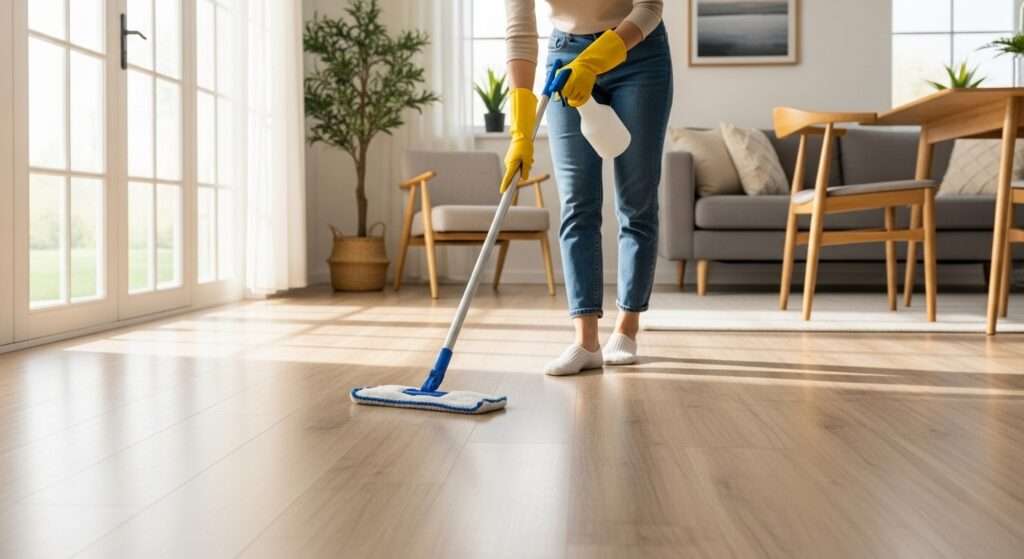
Understanding how to clean laminate flooring correctly starts with a simple rule: use minimal moisture and gentle tools. Begin by vacuuming with a soft-bristle attachment or sweeping with a microfibre dust mop to remove grit that could scratch the surface. Dirt left behind can act like sandpaper when mopping. Next, lightly dampen a microfibre mop with warm, not hot, water.
The mop should be well wrung out; laminate should never be soaked. When learning how to clean laminate flooring, avoid steam mops, as excessive heat and moisture can cause swelling along the plank joints. If needed, add a small amount of pH-neutral cleaner diluted in water. After mopping, dry the surface immediately with a soft cloth. Proper drying prevents moisture from seeping into seams and protects the protective wear layer from long-term damage. Mastering this gentle process keeps planks stable and visually polished. For professional installation or maintenance of your laminate and hardwood floors, explore our expert Flooring Services to keep your floors durable and beautiful.
Best Tools for Laminate Cleaning
Choosing the correct tools is one of the most important steps in understanding how to clean laminate flooring properly. Laminate surfaces have a protective wear layer that can be scratched or damaged if harsh equipment is used. The goal is to remove dust, grit, and spills without oversaturating the floor or causing abrasion. High-quality, gentle cleaning tools help preserve the shine and extend the lifespan of your flooring. Selecting the right equipment makes a significant difference in how to clean laminate flooring effectively and safely. Below are the safest and most effective tools you should use for laminate maintenance.
Microfibre Mop
A microfibre mop is the safest and most effective tool for laminate floors. It lifts dust, dirt, and fine particles without scratching the surface. Unlike traditional mops, it uses minimal water, which is essential because laminate flooring is sensitive to moisture. Both dry and slightly damp microfibre mops work well for routine cleaning and support proper how to clean laminate flooring practices.
Vacuum Cleaner with Soft Floor Head
A vacuum cleaner fitted with a soft floor attachment is ideal for removing loose debris. Always ensure the rotating brush bar is turned off, as stiff bristles can scratch the protective layer. Soft suction heads glide smoothly across the surface and pick up grit from corners and edges effectively, supporting safe how to clean laminate flooring routines.
Dry Microfibre Flat Mop
For daily dust control, a dry microfibre flat mop is perfect. It quickly captures fine dust and pet hair without spreading particles around. Regular dry mopping prevents buildup that can dull the floor’s appearance. This tool is lightweight, easy to store, and highly efficient for quick cleanups when following best practices for how to clean laminate flooring.
Felt Furniture Pads
Felt pads placed under chairs, tables, and heavy furniture help prevent scratches and scuff marks. They reduce friction when furniture is moved and protect the laminate’s wear layer. Replacing worn-out pads regularly ensures continued surface protection and complements long-term care for laminate flooring.
Entry Mats and Doorway Rugs
Entry mats placed at doorways stop dirt, sand, and moisture from being tracked inside. Grit particles are one of the biggest causes of surface scratches on laminate flooring. High-quality mats significantly reduce cleaning frequency and help maintain a smooth, polished finish over time, reducing the need for intensive how to clean laminate flooring maintenance.
Cleaning Products You Should Use
Choosing the right cleaning products is essential to protect the protective wear layer of laminate flooring. Unlike hardwood, laminate cannot be refinished once damaged, so using gentle, suitable solutions is crucial. The focus should always be on mild, non-abrasive products that clean effectively without leaving residue or causing dullness. Using appropriate products plays a central role in how to clean laminate flooring without harming the finish. Below are the safest cleaning products recommended for maintaining laminate floors.
pH-Neutral Floor Cleaner
A diluted, pH-neutral floor cleaner is the safest option for routine cleaning. It removes dirt and light stains without affecting the laminate’s protective coating. Always mix it with warm water according to the manufacturer’s instructions. Using the correct dilution prevents buildup and keeps the surface streak-free while supporting proper how to clean laminate flooring care.
Distilled White Vinegar Solution
A mild mixture of distilled white vinegar and water can help remove grime and neutralize odors naturally. It should always be well diluted to avoid surface damage. This solution works well for occasional deep cleaning but should not be overused. Excessive acidity may gradually dull the finish and interfere with the recommended way to clean laminate flooring.
Isopropyl Alcohol for Spot Cleaning
For stubborn scuffs or sticky spots, a small amount of isopropyl alcohol applied with a microfibre cloth is effective. It evaporates quickly, reducing moisture exposure to the floor. Always test it in a hidden area before use. This method is best reserved for targeted stain removal rather than full-floor cleaning when practicing safe method.
Products to Avoid
Avoid cleaners containing ammonia, bleach, or soap-based ingredients. These products can leave residue, cause cloudiness, or weaken the protective layer over time. Steam cleaners should also be avoided due to excess moisture. Choosing safe products ensures long-term durability and maintains a fresh, polished look when applying proper how to clean laminate flooring.
How to Remove Stains Without Damage?
Even with regular care, spills happen. Knowing how to clean laminate flooring properly includes treating stains quickly and gently. The most important rule is to wipe up liquids immediately to prevent moisture from seeping into the joints. For grease or food splatters, use a soft microfibre cloth with diluted neutral detergent. Rub gently and dry the area straight away. Ink or marker stains can often be removed with a small amount of isopropyl alcohol applied carefully to a cloth.
Always avoid scrubbing aggressively. Sticky residues such as glue may respond to diluted white vinegar. For tougher scuff marks, a tiny amount of acetone-based remover can help, but always patch test first. Effective stain removal is a vital part of how to clean laminate flooring safely, ensuring the wear layer remains intact and the surface looks flawless. Acting promptly reinforces proper ways to clean laminate flooring habits.
Common Mistakes When Cleaning Laminate
Laminate flooring is durable when you don’t make these common mistakes when laying laminate flooring, but it can be easily damaged if cleaned incorrectly. Many problems occur not because of poor-quality flooring, but due to improper cleaning methods. Excess moisture, harsh chemicals, and abrasive tools can shorten the lifespan of the protective wear layer. Understanding what not to do is just as important as knowing the correct cleaning process and mastering how to clean laminate flooring responsibly. Below are the most common mistakes homeowners should avoid.
Over-Wetting the Floor
Using too much water is one of the biggest mistakes when cleaning laminate. Excess moisture can seep into the seams, causing swelling or warping. Laminate floors are moisture-resistant, not waterproof. Always use a damp mop rather than a soaking-wet one to protect the core layer and maintain safe cleaning of laminate flooring.
Using Steam Mops
Steam mops may seem convenient, but they can cause serious damage. High heat and steam penetrate the joints and weaken the adhesive and core board. Over time, this may lead to lifting or separation between planks. Avoid steam cleaning unless the manufacturer specifically approves it when considering how to clean laminate flooring.
Applying Harsh Chemicals
Cleaners containing ammonia, bleach, or strong solvents can strip the protective coating. These products often leave a cloudy residue and reduce surface shine. Repeated use may permanently dull the floor’s finish. Always choose mild, pH-neutral solutions as part of proper care.
Scrubbing with Abrasive Tools
Stiff brushes, scouring pads, or rough scrubbers can scratch the wear layer. Even small scratches can make the surface look worn over time. Always use soft microfibre cloths or mops for safe cleaning. Gentle pressure is enough to remove most dirt when following the correct way to clean laminate flooring.
Skipping Pre-Cleaning
Mopping without vacuuming or sweeping first can spread grit across the surface. Tiny debris particles act like sandpaper when dragged under a mop. This leads to fine scratches and gradual dullness. Always remove loose dirt before using any wet-cleaning method to support proper routines.
How to Protect Laminate Flooring Long-Term?
Learning how to clean laminate flooring is only part of maintaining it; long-term protection is equally important. Prevention reduces wear and minimises the need for deep cleaning. Start by placing high-quality doormats at entrances to trap grit and moisture before it reaches the floor. Install felt pads under furniture legs to prevent scratches, especially beneath dining chairs and sofas. Always lift furniture rather than dragging it. In high-traffic areas, consider using area rugs to reduce surface abrasion.
Humidity control is also essential in UK homes. Excess moisture can affect plank stability, so maintaining balanced indoor humidity helps preserve the core board. Clean up spills immediately and avoid leaving wet footwear on the surface. By combining preventative care with proper knowledge, you significantly extend its lifespan and keep it looking professionally maintained. Consistency in cleaning prevents premature wear.
Can You Paint Laminate Flooring?
Homeowners sometimes ask, can you paint laminate flooring instead of replacing it? The short answer is yes, but with limitations. Laminate has a sealed wear layer, which means paint does not naturally bond well to the surface. If painting is attempted, the floor must be lightly abraded, thoroughly cleaned, and coated with a specialist primer designed for slick surfaces. However, painted laminate is rarely as durable as the original finish. High-traffic areas may chip or peel over time.
From a professional standpoint, replacing damaged boards is often more reliable than refinishing. Before painting, it’s also worth reviewing how to clean laminate flooring properly, as many issues are cosmetic rather than structural. Correct cleaning and maintenance may restore appearance without the risks associated with paint application, reinforcing the importance of knowing how to clean laminate flooring first.
How to Remove Laminate Flooring Safely?
There may come a time when replacing damaged planks is more practical than learning further how to clean laminate flooring. Understanding how to remove laminate flooring safely prevents unnecessary damage to the subfloor and surrounding trim. Start by removing skirting boards or beading carefully. Most laminate is installed as a floating floor with a click-lock system, meaning planks can be unlocked in reverse order of installation. Begin at one wall and gently lift each board to disengage the locking mechanism.
Avoid using excessive force, as this may crack planks and create sharp edges. If adhesive has been used, a flat pry bar can assist with removal, but proceed slowly. Before reinstalling new flooring, inspect the subfloor for moisture issues. Even the best knowledge of how to clean laminate flooring cannot compensate for underlying structural problems, highlighting why preventative care and proper practices matter.
Professional Tips for Long-Term Care
Long-term laminate floor care is all about prevention and consistency. Rather than relying on occasional deep cleaning, regular light maintenance helps preserve the protective wear layer and structural core. Environmental control, proper product use, and adherence to manufacturer guidance all contribute to durability. Professional installers often emphasise routine habits that reduce stress on the flooring over time and complement safe laminate flooring strategies. Below are expert-backed tips to ensure your laminate remains strong and visually appealing for years.
Final Advice
Knowing how to clean laminate flooring correctly is the key to preserving its appearance and structural strength for years. The goal is simple: remove dirt gently, limit moisture, and protect the wear layer from abrasion. Consistent light cleaning prevents build-up that can dull the surface or create fine scratches. Always vacuum before mopping, use a well-wrung microfibre mop, and dry the floor promptly. Avoid steam cleaners, harsh chemicals, and abrasive tools. Protect high-traffic areas with rugs and fit felt pads under furniture legs. If your floor begins to look tired, revisit your routine before considering replacement.
Frequently Asked Questions
1. How often should I clean laminate flooring?
For best results, light cleaning should be done weekly. Vacuum or sweep regularly to remove grit, and mop lightly when needed. Understanding properly means avoiding excessive water and sticking to gentle, consistent maintenance rather than heavy, deep cleans.
2. Can I use a steam mop on laminate flooring?
No, steam mops are not recommended. High heat and moisture can penetrate the joints and cause swelling or warping. If you want to protect your floor long-term, follow safe methods for using a lightly damp microfibre mop instead.
3. What is laminate flooring made of?
If you’re wondering what laminate flooring is, it typically consists of a protective wear layer, a decorative image layer, a high-density fibreboard (HDF) core, and a backing layer. This layered structure makes it durable but sensitive to excess moisture.
4. Can you paint laminate flooring?
Many homeowners ask, can you paint laminate flooring? While possible with a specialist primer and preparation, results are rarely as durable as the original finish. Replacement is often a better long-term solution.
5. What are common mistakes when laying laminate flooring?
Some common mistakes when laying laminate flooring include failing to leave expansion gaps, installing over damp subfloors, and skipping acclimatisation. These issues can lead to buckling or joint damage over time.
6. How do you remove laminate flooring safely?
If you need to know how to remove laminate flooring, start by removing skirting boards and unlocking planks in reverse order of installation. Most laminate floors are floating systems, allowing boards to be lifted without damaging the subfloor when handled carefully.