
Selecting the right flooring is an important decision for homeowners because it affects durability, maintenance, and the overall appearance of a space. Two of the most popular modern options are laminate flooring and vinyl flooring, both known for their affordability and stylish designs. However, understanding the differences between these materials is essential before making a final decision. A careful laminate vs vinyl flooring comparison helps homeowners evaluate which option fits their lifestyle, budget, and room conditions.
Both flooring types are designed with layered structures that include protective wear layers, decorative print layers, and supportive cores. While laminate flooring typically features a fiberboard core, vinyl flooring often uses a synthetic PVC core that improves moisture resistance. These structural differences influence performance in areas exposed to foot traffic, spills, and daily wear. In this guide, we provide a complete laminate vs vinyl flooring comparison to help you choose the most practical flooring solution.
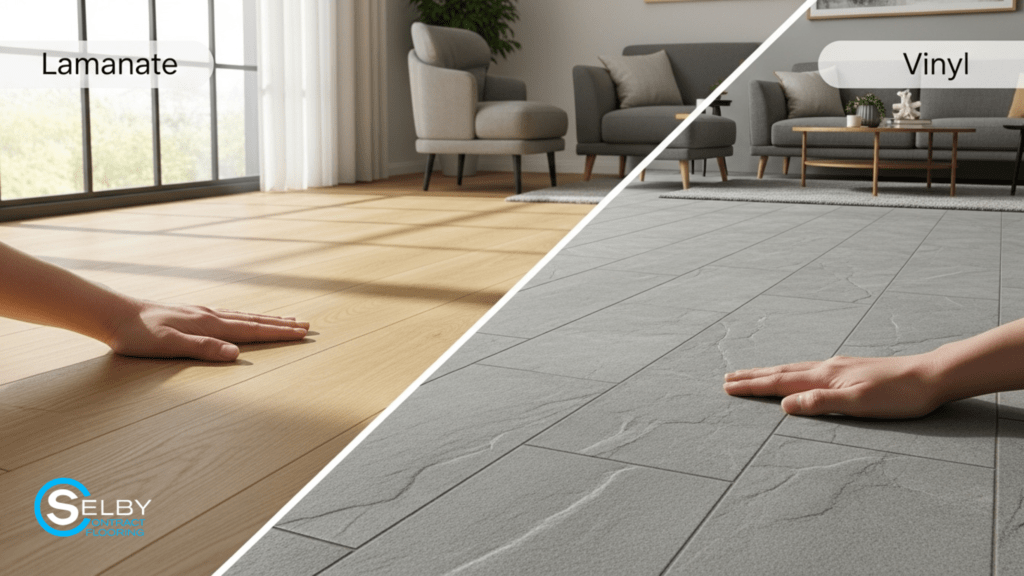
Understanding Laminate Flooring
To fully understand a laminate vs vinyl flooring comparison, it is helpful to first examine how laminate flooring is constructed and why it has become such a popular option for modern homes. Laminate floors are made from several layers that work together to create a durable and attractive surface. The core of laminate is typically a dense fiberboard core, which provides structural stability and strength. Above the core sits a decorative print layer designed to replicate natural materials such as hardwood, stone, or tile.
A transparent wear layer, often made with aluminum oxide coating, protects the surface from scratches, stains, and everyday wear. Many laminate products also include a built-in underlayment, which helps improve comfort and sound absorption. Because of its layered construction and realistic visuals, laminate flooring offers a stylish and cost-effective solution for living rooms, bedrooms, and other dry areas of the home.
Understanding Vinyl Flooring
To continue the laminate vs vinyl flooring comparison, it is important to understand how vinyl flooring is built and why it is widely used in modern homes. Vinyl flooring is a fully synthetic product designed with multiple layers that enhance durability and water resistance. At its center is a strong PVC core, which provides structural stability and flexibility under daily use. Above the core is a detailed print layer that replicates the look of natural wood, stone, or ceramic tile.
This decorative layer is protected by a durable urethane wear layer, which helps resist scratches, stains, and general wear from high-traffic areas. Popular types include Luxury Vinyl Plank (LVP), Luxury Vinyl Tile (LVT), and sheet vinyl, each offering different installation and design options. Thanks to its waterproof construction and resilient surface, vinyl flooring is often used in kitchens, bathrooms, and other areas exposed to moisture.
Key Differences Between Laminate and Vinyl
Understanding the difference between laminate and vinyl flooring is essential when performing a thorough laminate vs vinyl flooring comparison. While both materials are layered flooring systems designed to mimic natural surfaces, their core structures and performance characteristics differ significantly. Laminate flooring typically contains a compressed fiberboard core, which gives it a rigid structure and realistic embossed texture. In contrast, vinyl flooring uses a synthetic PVC core, making it more flexible and highly resistant to moisture.
This structural difference affects how each flooring type performs in environments exposed to water or humidity. Laminate flooring is generally better suited for dry areas such as bedrooms and living rooms, while vinyl flooring performs well in kitchens, bathrooms, and basements. These material differences also influence durability, installation methods, and maintenance requirements, which are important factors when completing a laminate vs vinyl flooring comparison.
Appearance and Design Options
When conducting a laminate vs vinyl flooring comparison, appearance is often one of the most important considerations for homeowners. Both laminate flooring and vinyl flooring are designed to replicate natural materials, allowing them to imitate the look of hardwood, stone, and ceramic tile without the high cost. The decorative print layer in each flooring type plays a major role in achieving this realistic appearance. Laminate flooring is widely appreciated for its deeply embossed textures, which create a realistic wood grain effect that closely resembles natural materials.
The rigid structure of laminate planks allows for strong surface detail and texture. Vinyl flooring, especially Luxury Vinyl Plank (LVP) and Luxury Vinyl Tile (LVT), has also improved significantly in design, offering convincing wood and stone visuals. Thanks to modern manufacturing techniques, both flooring options provide stylish finishes, multiple plank sizes, and numerous colour choices.
Cost Comparison: Laminate vs Vinyl Flooring
Cost is often a major factor when homeowners perform a laminate vs vinyl flooring comparison before starting a renovation project. Both laminate flooring and vinyl flooring are considered budget-friendly alternatives to natural materials such as hardwood flooring or ceramic tile, but their pricing structures can vary depending on product quality and installation requirements. In a typical vinyl flooring vs laminate cost comparison, laminate products often range from affordable entry-level planks to premium textured designs.
Vinyl flooring follows a similar range, with sheet vinyl being the most economical option, while Luxury Vinyl Plank (LVP) and Luxury Vinyl Tile (LVT) may cost more due to their advanced construction and enhanced durability. Installation expenses can also influence the total project cost. Both materials commonly use click-lock installation systems, which reduce labour time and make them attractive options for homeowners seeking cost-effective flooring solutions.
Durability and Lifespan Comparison
Durability plays a major role when evaluating a laminate vs vinyl flooring comparison, especially in busy households with frequent activity. Both flooring types are designed with protective wear layers that help resist scratches, stains, and everyday wear and tear. However, their core structures influence how well they perform in different environments. In terms of laminate vs vinyl flooring durability, laminate flooring provides strong surface resistance due to its hard aluminum oxide wear layer, which protects against scratches and fading.
However, its fiberboard core can be sensitive to moisture, meaning prolonged water exposure may lead to swelling or warping. Vinyl flooring, on the other hand, features a synthetic PVC core that provides excellent durability and flexibility. Because of this construction, vinyl flooring generally performs better in high-traffic areas and environments where moisture or spills are more likely to occur.
Water Resistance and Maintenance
Water resistance is a crucial factor in any laminate vs vinyl flooring comparison, especially for homeowners installing floors in kitchens, bathrooms, or other moisture-prone areas. The key difference lies in the core materials used in each flooring type. Laminate flooring contains a compressed fiberboard core, which can absorb water and swell if exposed to moisture for extended periods. In contrast, vinyl flooring is made from synthetic PVC materials, making it naturally waterproof flooring in most cases.
This allows vinyl floors to tolerate spills, humidity, and damp cleaning methods without causing structural damage. For maintenance, laminate flooring typically requires dry cleaning methods such as sweeping or using a nearly dry mop to prevent moisture damage. Vinyl floors are easier to maintain because they allow wet mopping and routine cleaning without affecting the surface, making them highly practical for busy households.
Installation and Ease of Setup
Installation is another important factor when conducting a laminate vs vinyl flooring comparison, especially for homeowners considering DIY projects. Both laminate flooring and vinyl flooring are designed with user-friendly systems that simplify the installation process. Most modern products use a click-lock installation system, allowing planks to connect without nails or glue.
With laminate flooring, planks are typically cut using tools such as a circular saw or table saw, and the boards are installed using a tongue-and-groove locking mechanism that creates a secure floating floor over the subfloor. Vinyl flooring offers a slightly simpler installation process in many cases. Luxury Vinyl Plank (LVP) can often be cut using a utility knife, making it easier for homeowners to handle. Because of these installation systems, both flooring types can be installed relatively quickly, making them convenient options for modern renovation projects.
Laminate vs Vinyl Pros and Cons
A balanced laminate vs vinyl flooring pros and cons review is essential when performing a detailed laminate vs vinyl flooring comparison. Both flooring materials offer practical benefits, but each also has limitations that homeowners should understand before making a decision. Laminate flooring is valued for its realistic wood-look textures, warm feel underfoot, and affordable pricing. The strong aluminum oxide wear layer helps resist scratches and fading, making it suitable for living rooms and bedrooms.
Pros of Laminate Flooring
One of the biggest advantages of laminate flooring in a laminate vs vinyl flooring comparison is its highly realistic appearance. Modern laminate products feature detailed wood-look textures, deep embossed grain patterns, and high-definition print layers that closely replicate natural materials like hardwood or stone. This makes laminate a popular choice for living rooms, bedrooms, and offices where style is important. Another benefit is its comfortable feel underfoot.
Thanks to built-in underlayment layers, laminate flooring often feels warmer and softer compared to some hard surfaces. Laminate is also relatively affordable and widely available in many designs and plank sizes, giving homeowners flexibility in their interior design choices. Additionally, laminate flooring is relatively easy to install using click-lock systems, allowing for quick installation and making it a suitable option for many DIY home renovation projects.
Cons of Laminate Flooring
Despite its advantages, laminate flooring also has limitations that homeowners should consider when performing a laminate vs vinyl flooring comparison. The most significant drawback is its sensitivity to moisture. Because laminate contains a fiberboard core, prolonged exposure to water can cause the planks to swell, warp, or separate. This makes laminate less suitable for areas such as bathrooms, laundry rooms, or basements. Another potential disadvantage is repair difficulty.
If the surface wear layer becomes damaged or if water penetrates the core, laminate flooring often cannot be repaired easily and may require replacing entire planks. Laminate can also produce a slightly hollow sound when walked on if the subfloor is uneven. While laminate performs well in dry environments, homeowners should carefully consider room conditions before choosing it as their primary flooring material.
Pros of Vinyl Flooring
Vinyl flooring offers several benefits that make it a strong competitor in any laminate vs vinyl flooring comparison. One of its biggest advantages is its waterproof construction. Because vinyl floors are made from synthetic PVC materials, they can resist moisture and spills without swelling or warping, making them suitable for kitchens, bathrooms, and basements. Another key advantage is durability.
Many modern vinyl floors, including Luxury Vinyl Plank (LVP) and Luxury Vinyl Tile (LVT), feature thick wear layers that protect against scratches, stains, and heavy foot traffic. This makes vinyl a practical choice for homes with pets or children. Vinyl flooring is also known for its easy maintenance. Regular sweeping and wet mopping are usually enough to keep the surface clean. With numerous design options that mimic wood, stone, and tile, vinyl flooring offers both practicality and style.
Cons of Vinyl Flooring
While vinyl flooring has many advantages, it also comes with a few drawbacks in a laminate vs vinyl flooring comparison. Lower-quality vinyl products may sometimes appear less natural compared to the highly textured surfaces of laminate. Even though modern Luxury Vinyl Plank (LVP) has improved realism, some homeowners still prefer laminate’s deeper embossed textures. Another concern is that vinyl flooring can occasionally dent under extremely heavy furniture or appliances, especially if protective pads are not used.
Over time, some cheaper vinyl products may also fade or lose their finish when exposed to direct sunlight. Environmental concerns are another factor to consider, as vinyl is made from synthetic PVC materials that are not easily recyclable. Despite these limitations, high-quality vinyl flooring remains a durable and practical option for many households.
Which Flooring Is Best for Your Home?
After completing a detailed laminate vs vinyl flooring comparison, many homeowners ask the same question: which is better laminate or vinyl flooring? The answer depends largely on the specific needs of your home, including moisture levels, traffic patterns, and design preferences. Both materials offer practical benefits, but they perform best in different environments. Laminate flooring is often a great choice for dry areas such as living rooms, bedrooms, and home offices.
Its realistic wood-look surface, textured finish, and comfortable feel underfoot make it a stylish option for spaces where moisture exposure is minimal. Vinyl flooring, on the other hand, is ideal for rooms exposed to humidity or spills, including kitchens, bathrooms, laundry rooms, and basements. By evaluating room conditions, durability requirements, and maintenance preferences, homeowners can confidently determine which flooring solution best suits their space.

Final Thoughts
After reviewing the key differences, a complete laminate vs vinyl flooring comparison shows that both flooring types offer practical advantages for modern homes. Each material combines affordability, attractive designs, and relatively simple installation methods, making them popular alternatives to natural hardwood flooring or stone flooring. Laminate flooring stands out for its realistic wood-look textures, comfortable feel, and stylish appearance in living spaces. However, because it contains a fiberboard core, it performs best in dry environments where moisture exposure is minimal. Vinyl flooring, especially Luxury Vinyl Plank (LVP) and Luxury Vinyl Tile (LVT), offers excellent water resistance, strong durability, and easier cleaning, which makes it ideal for kitchens, bathrooms, and busy households. Ultimately, choosing between laminate and vinyl depends on the room conditions, lifestyle needs, and maintenance preferences of the homeowner. Careful planning ensures the flooring delivers long-lasting performance.
Frequently Asked Questions
The main difference between laminate and vinyl flooring lies in their core materials. Laminate flooring typically contains a compressed fiberboard core, while vinyl flooring is made with a synthetic PVC core. This structural difference affects how each flooring type responds to moisture, durability demands, and long-term maintenance.
When comparing laminate vs vinyl flooring durability, vinyl flooring often performs better in areas exposed to moisture or heavy foot traffic. Its synthetic construction makes it more resistant to water damage, while laminate flooring can swell or warp if exposed to excessive moisture.
Vinyl flooring is generally easier to maintain because it allows wet mopping and regular cleaning without damaging the surface. Laminate flooring typically requires dry cleaning methods or a slightly damp mop to avoid moisture reaching the fiberboard core.
Yes, both flooring types are designed with click-lock installation systems that make them suitable for DIY projects. These systems create a floating floor that sits on top of the subfloor without requiring nails or glue, simplifying the installation process.
A thorough laminate vs vinyl flooring comparison shows that laminate flooring works best in dry spaces like living rooms, bedrooms, and offices. Vinyl flooring is better suited for areas with moisture, such as kitchens, bathrooms, laundry rooms, and basements, due to its waterproof properties.