
Best Temporary Flooring Over Carpet for Renters & Homes
March 26, 2026
Many renters and homeowners struggle with outdated or worn carpet, especially when replacing the flooring completely isn’t possible. In these situations, temporary flooring over carpet can be a practical and budget-friendly solution. Instead of removing the existing wall-to-wall carpet, temporary flooring allows you to create a fresh look while keeping the original surface protected underneath. This approach is especially useful in rental apartments, where permanent changes to flooring may not be allowed.
With the right materials, such as vinyl planks, interlocking tiles, or area rugs, you can quickly transform a room’s appearance without damaging the carpet fibers beneath. Another advantage of flooring over carpet is flexibility. If you move homes or decide to change your interior style later, the flooring can usually be removed without leaving marks or residue. This makes it an ideal choice for anyone wanting a simple, reversible flooring upgrade.
Can You Install Flooring Over Carpet?
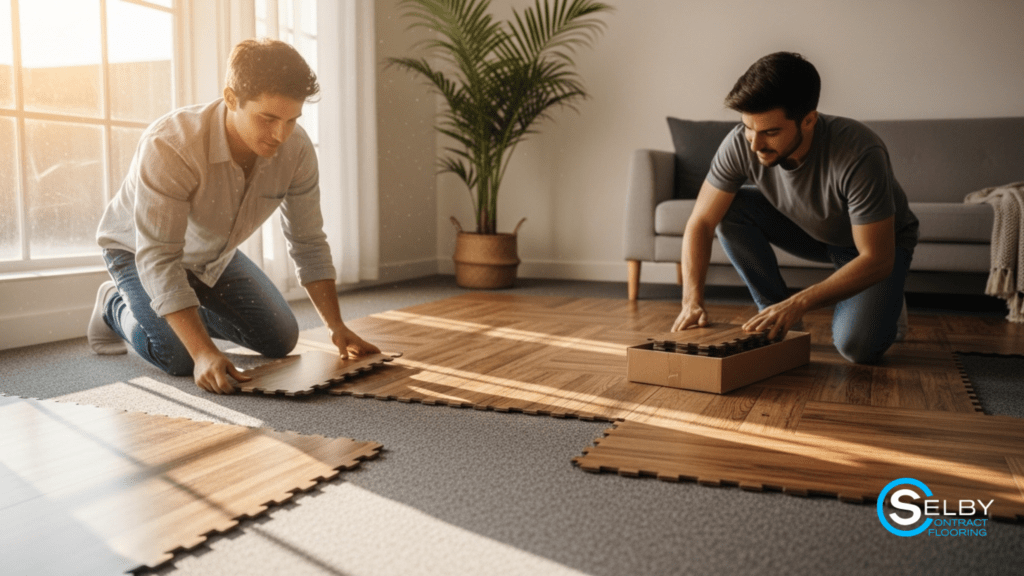
Many people wonder whether can you put temporary flooring over carpet without causing damage or creating an unstable surface. The answer is yes, but the success of the installation largely depends on the type and condition of the carpet underneath. In most cases, flooring over carpet works best when the existing flooring has a low-pile carpet, which provides a firmer and more level base. Thicker high-pile carpets or shag carpet can create instability because the soft fibers allow flooring materials to shift.
This movement can affect floating floor systems such as vinyl planks or laminate flooring. To improve stability, installers often place a plywood underlayment or hardboard panel on top of the carpet before laying new flooring. When done correctly, flooring over carpet can provide a stable, renter-friendly upgrade that improves both style and functionality without removing the existing carpet.
Why People Use Temporary Flooring?
There are many reasons why homeowners and renters choose temporary flooring over carpet instead of removing the existing carpet flooring. One of the biggest advantages is flexibility. Temporary flooring allows people to upgrade the look of their rooms without committing to a permanent renovation or risking damage to the original surface. Another benefit is affordability. Installing flooring over carpet is often much cheaper than replacing flooring entirely, making it a practical option for budget home improvements.
Many solutions such as interlocking tiles, vinyl sheets, or area rugs can be installed quickly without hiring professional installers. Temporary flooring is also popular in rental properties because it protects the existing carpet from stains, spills, and heavy foot traffic. By covering the carpet with a removable layer, renters can maintain the condition of the floor and still personalize their living space.
Best Temporary Flooring Options
Choosing the best flooring over carpet depends on the room type, carpet thickness, and how long you plan to keep the flooring in place. Some materials are designed to float above the carpet surface, while others require a firm underlayment for added stability. The right choice should balance durability, comfort, and easy removal. One of the most popular solutions for temporary flooring over carpet is vinyl plank flooring, which offers a realistic wood flooring appearance while remaining waterproof and durable.
Vinyl Plank Flooring
Vinyl plank flooring is one of the most popular choices for temporary flooring over carpet because it mimics the appearance of hardwood flooring while remaining durable and water-resistant. These planks typically use a click-lock floating system, allowing them to connect together without glue or nails.
Many homeowners prefer vinyl planks because they are easy to clean and resistant to spills, making them ideal for living rooms, bedrooms, and kitchens. However, when installing vinyl planks over carpet, it’s usually recommended to place a thin plywood base or hardboard underlayment on top of the carpet first. This creates a stable surface and prevents the planks from shifting or sinking into the carpet fibers.
Laminate Flooring
Laminate flooring is another excellent option for temporary installations because it offers a realistic wood-look finish at a lower cost than solid hardwood. Laminate planks are designed to connect through tongue-and-groove click systems, allowing them to float above the existing surface.
This flooring works best over low-pile carpet, where the base remains relatively firm and level. When installed correctly, laminate can create a smooth and stylish surface suitable for bedrooms, home offices, or living areas. However, laminate is not fully waterproof, so it should generally be avoided in rooms with high moisture levels such as bathrooms or laundry areas.
Peel-and-Stick Floor Tiles
Peel-and-stick tiles are a simple and budget-friendly solution for temporary flooring projects. These tiles usually have an adhesive backing, making them easy to install without special tools.
They are available in many materials such as vinyl, linoleum, rubber, and foam, allowing homeowners to replicate the look of ceramic tile, stone, or hardwood floors. Because the adhesive needs a flat surface, installers often place a hardboard underlayment or plywood panel over the carpet before applying the tiles. This extra layer prevents the tiles from peeling or curling when placed on soft carpet.
Interlocking PVC or Foam Tiles
Interlocking floor tiles made from PVC or foam materials are designed to snap together like puzzle pieces, making them one of the easiest temporary flooring options to install. These tiles create a slightly elevated surface that sits above the carpet and distributes weight evenly.
Because of their cushioning and durability, interlocking tiles are commonly used in home gyms, playrooms, and temporary office spaces. They also offer moisture resistance and shock absorption, which helps protect the carpet underneath from heavy furniture or frequent foot traffic.
Area Rugs and Carpet Tiles
For the simplest solution, many homeowners choose large area rugs or modular carpet tiles as a quick way to cover existing carpet. These options require almost no installation and can instantly update a room’s appearance. Area rugs are available in countless colors, patterns, and sizes, allowing you to create a focal point within your interior design.
Carpet tiles provide more coverage and can be arranged in different layouts to match the room’s design. They are also easy to replace if one tile becomes damaged or stained. By selecting the right flooring material for your room and carpet type, you can successfully install temporary flooring over carpet while improving both the appearance and functionality of your living space.
Temporary Floor Covering Ideas
If you want to refresh a room quickly, exploring different temporary floor covering over carpet ideas can help you find a style that matches your home. Many renters and homeowners use temporary flooring over carpet to create a cleaner, more modern look without removing the original carpet. For example, vinyl plank flooring can transform a living room by mimicking the appearance of hardwood flooring, giving the space a warm and elegant feel.
In bedrooms, carpet tiles or layered area rugs can add both comfort and decorative style. Kitchens or laundry areas often benefit from sheet vinyl flooring, which provides a waterproof surface that is easy to clean. Creative flooring layouts can also define different zones within a room. By using flooring over carpet strategically, you can highlight seating areas, workspaces, or play zones while protecting the existing carpet underneath.
Removable Flooring Options
Many renters and homeowners look for removable flooring over carpet options that provide both style and convenience. These flooring solutions are designed to sit on top of the existing carpet without causing permanent damage, making them ideal for rental homes or temporary renovations. When chosen correctly, temporary flooring over carpet can create a smooth and attractive surface that is easy to remove later.
One popular option is floating vinyl plank flooring, which uses a click-lock system to connect planks without adhesives. Another practical solution is interlocking floor tiles, commonly made from PVC or foam materials, which snap together and provide a stable base. For simpler setups, area rugs combined with a non-slip rug pad can instantly update a room. Each of these options offers flexibility, allowing you to upgrade your space while keeping the original carpet protected.
How to Install Temporary Flooring Over Carpet?
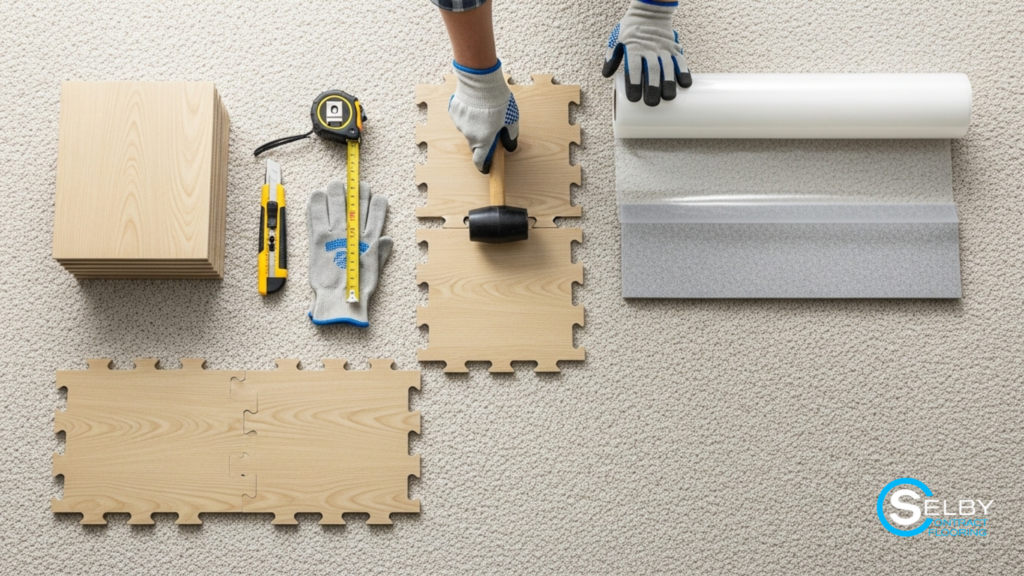
Learning how to install flooring over carpet correctly is essential for achieving a stable and attractive result. The first step is preparing the existing carpet surface. Vacuum thoroughly to remove dust, debris, and loose fibers that could cause uneven areas once the new floor is placed. Clean flooring helps ensure flooring over carpet sits flat and performs properly. Next, evaluate the carpet pile height.
If the carpet is thick or plush, it’s best to place a plywood base or hardboard underlayment on top to create a firm surface. This support layer prevents movement and protects the carpet underneath. Once the base is ready, begin installing your chosen flooring material, such as vinyl planks, laminate boards, or interlocking tiles. Carefully align edges and leave a small expansion gap near walls. This ensures the flooring remains stable while still allowing natural movement.
Choosing Flooring for Each Room
Selecting the right temporary flooring over carpet depends on how each room in your home is used. Different spaces require different levels of durability, moisture resistance, and comfort. By choosing materials carefully, you can improve both the appearance and functionality of your flooring while protecting the existing carpet underneath. In living rooms, vinyl plank flooring or laminate flooring works well because these options provide a stylish wood-look surface that can handle regular foot traffic.
Bedrooms often benefit from softer solutions like carpet tiles or layered area rugs, which add warmth and comfort. For kitchens or laundry rooms, waterproof vinyl flooring is usually the best choice because it resists spills and moisture. Meanwhile, home offices or playrooms may benefit from interlocking floor tiles, which provide a stable surface for desks, chairs, or activity areas.
Common Mistakes to Avoid
Installing temporary flooring over carpet can work well, but a few common mistakes can reduce stability and shorten the life of the floor. One of the biggest errors is laying flooring over high-pile carpet without adding a firm support layer. Thick carpet can compress under pressure, causing planks or tiles to shift, separate, or wear unevenly over time. Another mistake is skipping proper cleaning before installation. Dust, dirt, and trapped debris under the new floor can create bumps and make the surface feel uneven.
Some homeowners also ignore door clearance, only to find that doors no longer open smoothly once the extra floor height is added. Using permanent adhesives is another risk, especially in rentals. Strong glue may damage the existing carpet fibers and make removal much harder. Careful planning helps ensure temporary flooring over carpet remains practical, removable, and visually appealing.
Temporary Flooring Cost Guide
Understanding the cost of flooring over carpet can help homeowners and renters plan their upgrades more effectively. Prices vary depending on the material, room size, and whether you install the flooring yourself or hire professionals. Fortunately, many temporary flooring options are designed for DIY installation, which can significantly reduce the overall cost. For example, vinyl plank flooring usually costs more than basic solutions but offers durability and a realistic wood-look finish.
Peel-and-stick tiles and interlocking floor tiles are often more affordable and easier to install, making them popular choices for temporary projects. Large area rugs can also serve as a simple and inexpensive way to cover carpet while enhancing the room’s style. In most cases, installing temporary flooring over carpet costs far less than replacing the entire floor, making it an appealing option for budget-conscious home improvements.
Expert Flooring Advice for Renters
For renters, upgrading a room without violating the lease can be challenging. That’s why many people turn to temporary flooring over carpet as a practical way to improve the appearance of their space while keeping the original flooring intact. Because rental agreements usually require tenants to leave the property in its original condition, removable flooring solutions are often the safest choice. Before installing any flooring, check the condition of the existing carpet and confirm that the installation method does not involve permanent adhesives or damage to carpet fibers.
Options like floating vinyl planks, interlocking tiles, and large area rugs are especially popular because they can be installed and removed with minimal effort. Choosing high-quality materials also helps maintain stability and comfort. With the right approach, flooring over carpet allows renters to personalize their homes while protecting their security deposit.
Final Thoughts
Upgrading a room doesn’t always require removing existing carpet or investing in a full renovation. With the right materials and preparation, temporary flooring over carpet can provide a stylish and practical solution for both renters and homeowners. These flooring options allow you to improve the look and functionality of your space while keeping the original flooring protected underneath. From vinyl plank flooring and laminate boards to interlocking tiles and area rugs, there are many ways to create a durable surface without permanent installation.
The key is choosing materials that suit your carpet pile height, room usage, and budget. Proper preparation, such as cleaning the carpet and adding a stable underlayment, also helps ensure better results. When installed carefully, flooring over carpet offers flexibility, affordability, and convenience, making it an excellent option for anyone looking to refresh their home without major construction.
Frequently Asked Questions
Can temporary flooring damage carpet?
In most cases, temporary flooring over carpet will not damage the existing carpet if it is installed correctly. Floating materials such as vinyl planks, interlocking tiles, or large area rugs usually rest on top of the carpet without adhesives or nails. However, using heavy furniture or permanent glue can compress carpet fibers and leave marks over time. To protect the carpet, it’s recommended to use a support layer like plywood or a non-slip rug pad.
What flooring works best over thick carpet?
For high-pile carpet, it’s best to use flooring systems that provide stability, such as interlocking PVC tiles or a floating floor system installed over a plywood base. Thick carpet can cause planks or tiles to shift if there is no firm support layer underneath.
Can vinyl plank flooring be installed over carpet?
Yes, vinyl plank flooring can sometimes be installed over carpet, especially when using a floating click-lock system. However, the carpet should be low-pile and relatively firm. If the carpet is too soft, adding underlayment panels or hardboard sheets can help create a more stable surface.
Do you need plywood under temporary flooring?
A plywood underlayment is not always required, but it can improve stability when installing temporary flooring over carpet. It creates a solid surface that prevents movement and helps protect the carpet from heavy furniture or frequent foot traffic.
Is temporary flooring renter friendly?
Yes, temporary flooring over carpet is considered very renter-friendly because it can usually be removed without damaging the original flooring. Options like floating vinyl planks, interlocking floor tiles, and area rugs allow renters to upgrade their interior design while still keeping the property in its original condition.