
Purpose and Benefits of Stair Nosing 2026
February 28, 2026
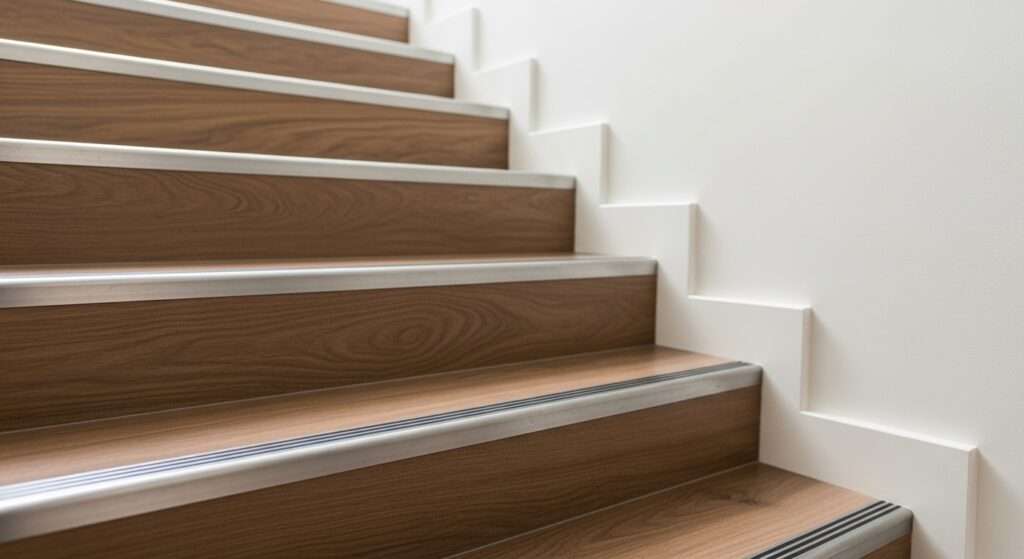
If you’ve ever wondered what is stair nosing, it refers to the horizontal, protruding edge of a stair tread where most foot traffic occurs. Positioned at the front of each step, stair nosing slightly overhangs the stair riser, creating a defined edge that improves both structure and safety. This projection, often called the nosing projection, is a critical design feature in both residential and commercial staircases.
In modern construction, stair nosing can be manufactured from materials such as aluminium, PVC, rubber, or timber, depending on performance requirements. In high-traffic environments, it is often fitted with an anti-slip insert to enhance traction. Understanding what is stair nosing is essential when planning safe, compliant, and durable stair installations across UK homes, offices, and public buildings.
Purpose of Stair Nosing Explained
Understanding what is stair nosing becomes clearer when you examine its core function. The primary purpose of stair nosing is to enhance safety by increasing the usable surface area of each stair tread. By slightly projecting beyond the riser, it provides additional foot placement space, making movement up and down the staircase more stable and comfortable.
Beyond safety, what is stair nosing also protects the step edge from impact damage and daily wear. Since the front of the tread experiences the most pressure, adding a durable nosing helps preserve the structure of the staircase over time. In commercial properties, this reinforcement is particularly important due to higher foot traffic. When correctly specified and installed, stair nosing improves durability, visibility, and long-term performance in both residential and commercial settings.
Why Stair Nosing Improves Safety?
To fully understand what is stair nosing, it’s important to look at its safety benefits. Staircases are one of the most common locations for slips, trips, and falls, particularly in busy commercial buildings. Installing anti-slip stair nosing significantly increases traction at the step edge, where most foot contact occurs. Many designs include abrasive inserts or rubber strips that enhance grip in dry and wet conditions.
Another key safety featureof what is stair nosing is visual contrast. In public and commercial environments, stair nosing is often finished in a contrasting colour to improve step visibility, supporting safer movement for those with reduced vision. Durable materials such as aluminium stair nosing are commonly used in high-traffic areas because they combine structural strength with slip resistance. Properly specified nosing reduces accident risk and improves compliance with UK safety standards.
Stair Nosing Types for 2026
Understanding what is stair nosing includes knowing the different styles available in 2026. Stair nosing is not only a design feature but also a key safety component that protects step edges and improves visibility. Different environments require different profiles, depending on traffic levels and compliance standards. From residential staircases to commercial buildings, selecting the correct type ensures both durability and safety. Below are the most common stair nosing types used today.
Pencil Round Nosing
Pencil round nosing features a smooth, curved front edge. It provides a softer, more traditional appearance. This style is commonly used in residential homes. The rounded profile also reduces sharp edge exposure.
Square Edge Nosing
Square edge nosing delivers a clean and modern finish. It suits contemporary interiors and minimalist designs. The straight profile creates a sharp step definition. It is popular in modern residential and office settings.
Heavy-Duty Aluminium Nosing
Aluminium stair nosing with anti-slip inserts is widely used in commercial spaces. It offers high durability and strong grip performance. This type is ideal for schools, offices, and retail areas. The metal profile protects edges from heavy wear.
Flush or No-Overhang Nosing
Flush nosing sits level with the tread without extending outward. It creates a sleek, seamless appearance. This style is chosen for minimalist and modern stair designs. It also reduces trip hazards caused by protruding edges.
Contrasting Anti-Slip Profiles
Contrasting stair nosing improves step visibility in public buildings. Anti-slip inserts enhance safety in high-traffic areas. This type supports safety compliance regulations. It is commonly installed in healthcare, transport hubs, and commercial properties.
Materials Used in Stair Nosing
When asking what is stair nosing, material choice plays a major role in performance and durability. Modern stair nosing is available in a range of materials, each suited to different environments. Aluminium stair nosing is widely used in commercial and industrial settings because it offers excellent strength, corrosion resistance, and compatibility with anti-slip inserts.
PVC and vinyl stair nosing are popular in residential spaces due to their affordability and ease of installation. Rubber nosing provides enhanced grip, making it ideal for schools, healthcare facilities, and high-traffic areas. For timber staircases, matching wooden nosing can create a seamless aesthetic finish. In more premium designs, stainless steel or brass profiles may be specified. Selecting the right material ensures long-term protection, safety compliance, and durability in both residential and commercial staircases.
Stair Edge Trim Installation Guide
Understanding what is stair nosing is only part of the process, correct installation is equally important. Proper stair edge trim installation begins with preparing the stair tread surface. The area must be clean, dry, and level to ensure secure bonding. Depending on the material, nosing can be fixed using heavy-duty adhesive or mechanical fasteners such as screws for added strength.
For carpeted stairs, what is stair nosing is typically installed before the carpet is wrapped neatly over the tread and secured into place. When used with vinyl or laminate flooring, expansion gaps must be considered to prevent movement issues. In commercial environments, professional fitting ensures alignment, secure fixing, and compliance with safety standards. Accurate installation guarantees durability, enhances traction, and protects the stair edge from long-term wear.
Anti-slip Stair Nosing Benefits
When considering what is stair nosing, one of its most important features is slip resistance. anti-slip stair nosing is specifically designed to improve traction at the edge of each stair tread, reducing the likelihood of slips and falls. This is particularly crucial in commercial, industrial, and public buildings where foot traffic is high and safety standards are strict.
Anti-slip profiles often include abrasive grit inserts, ribbed rubber strips, or textured aluminium surfaces to provide extra grip in both dry and wet conditions. These features are especially valuable in entrances, healthcare facilities, schools, and retail environments. By reinforcing the step edge and enhancing visibility through contrasting colours, anti-slip stair nosing improves user confidence and safety. Properly installed systems also extend the lifespan of the staircase by protecting high-impact areas from damage.
UK Building Regulations and Compliance
When understanding what is stair nosing, compliance with UK safety standards is essential, especially in commercial and public buildings. In England and Wales, staircase design must align with Approved Document K of the Building Regulations, which focuses on protection from falling, collision, and impact. Stair nosing plays a role in ensuring safe step geometry and clear edge definition.
In public access areas, contrasting anti-slip stair nosing is often recommended to improve step visibility, particularly for visually impaired users. Slip-resistant surfaces are also required in many workplaces under Health and Safety Executive (HSE) guidance. Commercial environments such as offices, schools, and healthcare facilities must prioritise durability and traction performance. Selecting compliant stair nosing materials and ensuring professional installation helps meet legal obligations while significantly improving overall stair safety.
Stair Nosing for Commercial Spaces
When businesses ask what is stair nosing, the answer often relates directly to safety and durability in high-traffic environments. In commercial spaces such as offices, retail stores, schools, healthcare facilities, and hospitality venues, staircases experience constant daily use. Installing robust stair nosing helps protect the stair tread edge from heavy wear while maintaining structural integrity.
Commercial projects typically require heavy-duty aluminium stair nosing with integrated anti-slip inserts to ensure long-term performance. In public buildings, contrasting colours are frequently specified to improve visibility and meet accessibility standards. For carpeted stairs, correctly fitted nosing also secures the flooring material and prevents premature fraying. Choosing the right specification ensures compliance, reduces maintenance costs, and enhances overall safety within busy commercial environments.
Cost of Stair Nosing in the UK
When evaluating what is stair nosing, cost is an important consideration for both residential and commercial projects. In the UK, prices typically range from £10 to £40 per metre depending on the material, finish, and performance level. Standard PVC stair nosing is generally more affordable, while heavy-duty aluminium stair nosing with anti-slip inserts sits at the higher end of the scale. To get a detailed quote and explore professional stair nosing installation, visit our Flooring Services page.
Installation costs vary depending on staircase size, condition, and fixing method. Mechanical fixing may require additional labour compared to adhesive installation. Commercial projects may also specify contrasting or abrasive inserts to meet safety standards, which can influence pricing. Although there is an upfront investment, quality stair nosing reduces long-term maintenance costs by protecting the stair edge from wear and structural damage.
Common Mistakes to Avoid
When learning what is stair nosing, it’s equally important to understand common installation and specification errors. One frequent mistake is choosing the wrong projection size, which can create a tripping hazard instead of improving safety. Incorrect alignment during stair edge trim installation can also leave gaps or uneven edges, reducing durability and visual appeal.
Another issue is failing to select appropriate anti-slip stair nosing for high-traffic or moisture-prone areas. In commercial settings, overlooking colour contrast requirements may affect accessibility compliance. Using low-quality adhesive or skipping mechanical fixings where required can lead to premature loosening. By selecting the correct material, ensuring proper fitting, and considering safety regulations, you maximise performance and longevity while fully understanding what is stair nosing in practical terms.
Why Choose Selby Contract Flooring?
If you’re researching what is stair nosing and planning a new installation, expert guidance ensures the best results. At Selby Contract Flooring, we specialise in supplying and fitting high-quality stair nosing solutions for commercial and residential projects across London and the wider UK. Our team understands the importance of safety, durability, and compliance with current building standards.
From selecting the right stair nosing types to delivering precise stair edge trim installation, we provide tailored solutions based on your environment and foot traffic levels. Whether you require heavy-duty anti-slip stair nosing for a commercial property or a seamless finish for a modern staircase, we ensure professional workmanship and minimal disruption. Our focus is on long-lasting performance, safety compliance, and a flawless finish.
Conclusion
Understanding what is stair nosing is essential for anyone designing or upgrading a staircase in 2026. More than just a finishing detail, stair nosing plays a vital role in safety, durability, and regulatory compliance. By extending slightly beyond the stair riser, it improves foot placement, protects the stair tread edge, and enhances overall visibility.
Modern anti-slip stair nosing solutions now combine advanced materials, improved traction inserts, and contrasting colour options to meet evolving safety expectations in both residential and commercial settings. Whether installed in offices, schools, retail spaces, or private homes, high-quality stair nosing reduces accident risk and extends staircase lifespan. Choosing the correct specification and professional installation ensures long-term performance, making stair nosing a critical component of safe and modern staircase design.
FAQs About Stair Nosing
What is stair nosing?
Stair nosing is the horizontal, projecting edge of a stair tread that extends slightly beyond the riser. It improves safety, protects the step edge, and enhances visibility on staircases.
What is the purpose of stair nosing?
The main purpose of stair nosing is to increase foot placement area, improve traction, and reduce the risk of slips and falls, particularly in high-traffic environments.
What are the main stair nosing types?
Common stair nosing types include pencil round, square edge, flush (no overhang), and heavy-duty aluminium profiles with anti-slip inserts.
Is anti-slip stair nosing required by law?
In many commercial and public buildings, slip-resistant stair edges are recommended under UK safety guidance to improve compliance and reduce accidents.
How long does stair nosing last?
With proper material selection and professional installation, stair nosing can last many years, even in demanding commercial settings.