
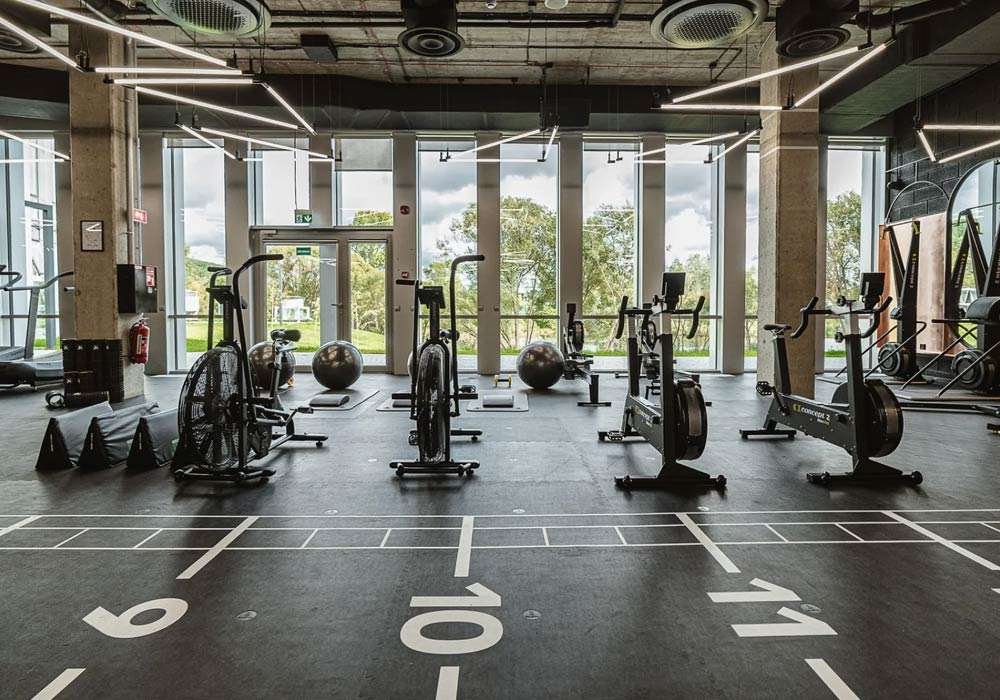
The modern fitness industry is more competitive than ever. When an prospective member walks into your facility, they make a subconscious judgment about the quality of your gym within the first ten seconds. They notice the lighting, the spacing of the equipment, and crucially, what they are standing on.
Yet, many new facility owners treat commercial flooring as an afterthought, allocating their entire budget to flashy machines. This is a critical error. The foundation of your facility dictates the safety, acoustics, and aesthetic appeal of your entire operation.
But physical infrastructure is only half of the equation. Once you have built a premium, safe environment, how do you keep members coming back month after month? The answer lies in bridging the gap between a high-performance physical space and high-performance biological tracking.
In this comprehensive guide, we will break down how to optimize your commercial gym’s physical foundation through strategic flooring, and how to empower your members with the right digital tools to ensure they see the physical results that keep them paying their monthly dues.
Section 1: The Foundation of Fitness – Why Commercial Flooring is Your Most Important Asset
When you drop a 50kg dumbbell, that kinetic energy has to go somewhere. If your flooring isn’t engineered to handle it, that energy travels straight into your concrete subfloor—causing structural damage—and reverberates back up into the lifter’s joints.
Commercial flooring is a highly specialized architectural element. Here is exactly why investing in professional installation from experts like Selby Contract Flooring is non-negotiable for commercial success.
1. Force Reduction and Subfloor Protection
Every time weight meets the floor, the impact generates a shockwave. In a commercial setting, this happens thousands of times a day. Premium rubber gym flooring is rated by its “force reduction” capabilities. Thick, vulcanized rubber tiles (typically 30mm to 40mm thick in heavy lifting zones) compress upon impact. This compression slows the deceleration of the weight, absorbing the kinetic energy before it can fracture the concrete slab beneath. Repairing a shattered concrete subfloor can close your gym for weeks; investing in the right rubber tiles prevents the damage entirely.
2. Acoustic Management and Vibration Control
Noise complaints are one of the leading causes of regulatory issues for urban gyms. The sound of weights clanking and treadmills pounding travels through building structures as “structure-borne noise.” Specialized acoustic underlayments and high-density rubber top-layers decouple the impact from the building’s structure. This is especially vital if your gym is located in a mixed-use building or above retail spaces. A professionally installed floor dampens acoustic reverberations, creating an intense, yet focused training environment rather than a chaotic, echoing warehouse.
3. Biomechanical Safety and Slip Resistance
Sweat, spilled water, and chalk are inevitable in a gym. Slips and falls are a massive liability. Commercial-grade fitness flooring features specific coefficient of friction (CoF) ratings. Even when wet, the porous nature of specialized gym rubber provides traction. Furthermore, the slight “give” in the flooring—known as point elasticity—reduces the impact on the knees and ankles of members performing plyometrics or long-distance indoor running.
Section 2: Zoning Your Facility Through Intelligent Flooring Design
You do not need 40mm thick rubber across your entire 10,000-square-foot facility. Smart gym design utilizes different flooring materials to organically create “zones” within the space. This guides traffic flow, optimizes your budget, and enhances the user experience.
The Heavy Lifting & Free Weight Zone
This is the high-impact area. Power racks, Olympic lifting platforms, and heavy dumbbells live here. You need maximum impact resistance, typically achieved with thick, interlocking rubber tiles or custom-built lifting platforms seamlessly integrated into the floor.
The Member Integration: Members in this zone are usually focused on progressive overload and strength building. Providing them with high-end barbells isn’t enough; they need to know what weight to put on them. To maximize their safety and progress, direct your members to calculate their true 1-Rep Max. By understanding their theoretical limits using clinically validated formulas, they can train safely in your heavy lifting zone without risking injury from failed, untested lifts.
The Functional Training & Turf Zone
Functional fitness, sled pushes, and HIIT (High-Intensity Interval Training) require a different surface. Artificial indoor turf with a shock-absorbing underlay is ideal here. It provides a visual break from the black rubber, adds a premium aesthetic, and allows for dragging heavy sleds without destroying the floor underneath.
The Cardio & Machine Zone
Because the machines themselves bear the brunt of the movement, the flooring here needs to prioritize hygiene, ease of cleaning, and machine stability. Rolled rubber flooring (typically 8mm to 10mm thick) or premium Luxury Vinyl Tiles (LVT) with an acoustic backing work perfectly. There are no heavy weights being dropped here, so the focus shifts to a seamless, easy-to-mop surface that resists sweat absorption.
The Reception and Assessment Area
First impressions matter. Your reception area should feel welcoming and professional. Commercial LVT or premium commercial carpet tiles are highly durable and set a welcoming tone.
The Member Integration: This is also where personal trainers conduct their initial consultations. When onboarding a new client, guessing their caloric needs leads to poor results. Trainers should utilize professional-grade, science-based tools during these intake sessions. Using accurate, free daily calorie and TDEE calculators allows your staff to build customized, data-driven nutrition plans using WHO and CDC-approved formulas right at the front desk.
Section 3: Beyond the Floor – Retaining Members with Biological Data
You have built a stunning facility. The floors look incredible, the layout is intuitive, and the equipment is state-of-the-art. But facilities don’t retain members; results retain members.
The fitness industry suffers from a notoriously high churn rate. A member signs up in January, attends for six weeks, fails to see visible changes in the mirror, and cancels by March. The failure wasn’t your facility; the failure was a lack of tracking and data.
Bridging the Gap Between Effort and Results
Most gym-goers operate on guesswork. They guess how hard they should lift, they guess how much water they should drink, and most detrimentally, they guess how much they should eat. You can have the most expensive shock-absorbent flooring in the city, but if a member is eating in a massive caloric surplus while trying to lose weight, they will blame the gym when they don’t see progress.
To build a truly premium facility, you must foster a culture of tracking.
Equipping Your Members with the Right Tools
You don’t need to build custom software to provide immense value to your members. Curating resources for them builds trust and authority.
Encourage your members to move away from generic advice and utilize specific, medical-grade formulas. For example, understanding the difference between simple weight loss and actual fat loss requires dialing in macronutrients. By providing your members access to science-based Body Fat and Macro assessment tools, you empower them to take control of their nutrition outside the gym.
When your members use tools that don’t store their data but provide hyper-accurate, AI-enhanced context based on the US Navy and Mifflin-St Jeor equations, they get the exact roadmap they need. When they follow that roadmap, they see results. And members who see results never cancel their direct debits.
Section 4: Maintenance and Long-Term Value
Once your premium commercial flooring is installed, maintaining it ensures it lasts for decades. Poor maintenance not only degrades the aesthetic of the gym but can compromise the safety and CoF (slip resistance) of the rubber.
Daily Maintenance:
Vacuuming is preferable to sweeping, as brooms can push dust into the porous surface of rubber flooring.
Use a pH-neutral cleaner. Harsh chemicals, bleach, and heavy degreasers will break down the binders in vulcanized rubber, causing it to flake and deteriorate over time.
Weekly Maintenance:
Utilize an auto-scrubber with a soft cylindrical brush for deep cleaning rolled rubber and interlocking tiles. This lifts sweat and chalk from the micro-crevices in the floor.
For turf areas, use a specialized turf vacuum to remove debris and lift the fibers back to their upright position.
Partnering with a professional team like Selby Contract Flooring ensures that your installation comes with expert advice on exact maintenance protocols, protecting your investment for the long haul.
Summary: The Blueprint for Success
Building a commercial gym that stands the test of time requires a dual approach. You must construct a physical environment built on safety, durability, and intelligent zoning. A premium flooring installation is the literal foundation of this physical environment.
Simultaneously, you must cultivate an environment of biological success. By guiding your members away from guesswork and toward accurate, data-driven fitness calculators, you ensure their physical efforts are matched by their nutritional precision.
When you combine a world-class physical facility with the digital tools required to achieve real-world results, you stop being just a building with weights—you become an indispensable part of your members’ lives.
Frequently Asked Questions
The industry standard for heavy free-weight and Olympic lifting zones is heavy-duty vulcanized rubber tiles, typically ranging from 30mm to 40mm in thickness. These provide necessary force reduction to protect concrete subfloors from dropped barbells and reduce acoustic vibration throughout the building.
Yes. Zoning your flooring is highly recommended. Lifting zones require thick, shock-absorbent rubber, while cardio zones are better suited to thinner rolled rubber (8-10mm) or Luxury Vinyl Tile (LVT). Turf is recommended for sleds and functional fitness. Mixing materials optimizes your budget and improves the user experience.
While upgrading facility aesthetics and equipment is important, member retention is directly tied to member results. Facilities that encourage data tracking—such as monitoring TDEE (Total Daily Energy Expenditure), tracking macros, and calculating 1-Rep Maxes using science-based tools—see significantly lower churn rates because their members achieve measurable progress.