
How to Measure Stair Carpet for a Perfect Fit?
February 28, 2026
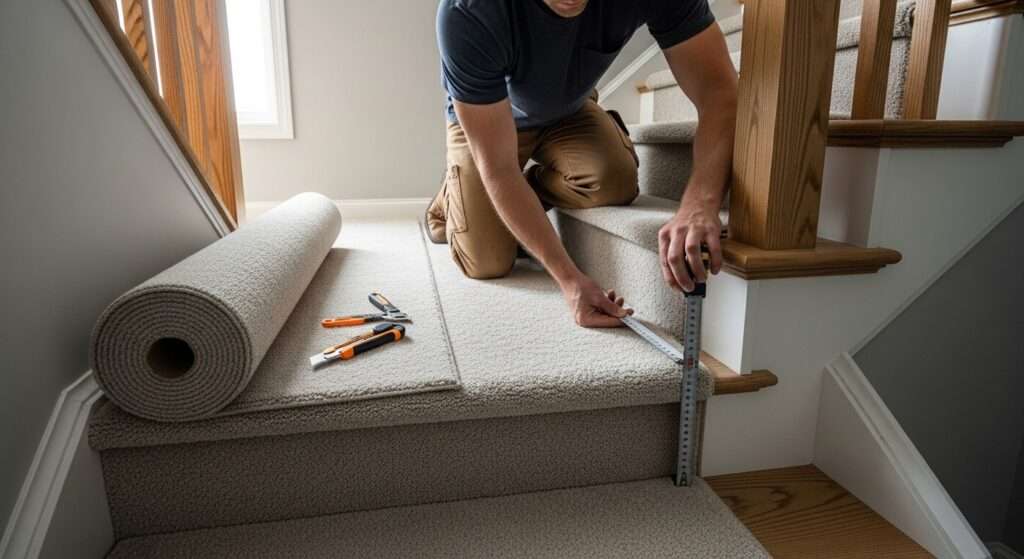
When learning how to measure stair carpet, accuracy is everything. Even small measuring errors can result in wasted material, visible joins, or carpet that simply doesn’t fit correctly. Whether you are installing a full staircase covering or a stylish carpet runner, precise measurements ensure a clean finish and long-term durability. Poor calculations often lead to additional costs, delays, and unnecessary stress during installation.
In the UK, most carpets are sold by square metre (m²), so understanding exactly how to measure stair carpet helps you budget correctly and avoid overspending. Accurate measuring is especially important for staircases with landings, winders, or curved sections. Taking the time to measure stairs for carpet properly ensures safety, aesthetic consistency, and a professional result that enhances both residential and commercial properties.
Tools You Need to Measure Stair Carpet
Before beginning how to measure stair carpet, gathering the correct tools is essential for accuracy. Precise measurements help avoid ordering too much or too little material. Since UK measurements are typically taken in centimetres and metres, reliable equipment ensures consistent results. Being well-prepared also reduces mistakes and saves time during the process. Below are the key tools you should have ready before you measure stairs for carpet.
Tape Measure
A sturdy, lockable tape measure is the most important tool. It allows you to measure each tread and riser accurately. Choose one with clear metric markings for UK measurements. A locking feature helps maintain steady readings.
Notebook and Pen
Recording measurements immediately prevents confusion later. Write down each stair’s tread width and riser height separately. Clear notes reduce calculation errors. Staying organised ensures accurate totals.
Calculator
A basic calculator makes it easier to add multiple measurements together. It helps convert centimetres into metres if required. Accurate calculations prevent material shortages. This is especially useful for larger staircases.
Laser Measure (Optional)
A laser measuring device can improve speed and precision. It is helpful for wider staircases or landings. While not essential, it enhances professional-level accuracy. Many installers prefer it for efficiency.
Assistant for Support
Having someone assist you can make measuring easier. They can hold the tape steady while you record figures. This is particularly useful on curved or wide stairs. Extra support reduces movement errors and improves consistency.
Understanding Stair Parts First
Before you begin learning how to measure stair carpet, it’s important to understand the basic parts of a staircase. The tread is the flat section where you place your foot, while the riser is the vertical section between each step. The nosing refers to the front edge of the tread, which may slightly overhang the riser below. Knowing these terms ensures you measure correctly and avoid costly errors.
You’ll also need to consider the overall stair width, which determines how to measure stair carpet or runner must be. If your staircase includes a landing, this section must be measured separately. When you clearly identify each component before you measure stairs for carpet, the calculation process becomes far simpler and far more accurate.
How to Measure For a Stair Carpet Step by Step?
Measuring accurately is the most important part of how to measure stair carpet correctly. A careful, step-by-step approach ensures you order the right amount of material and avoid unnecessary waste. Each stair consists of a tread (the flat part) and a riser (the vertical section), and both must be measured properly. Adding a small allowance for trimming also prevents fitting issues. Follow the steps below for clear and reliable results.
Step 1: Measure the Tread Depth
Start at the top stair and measure the tread from the back edge to the front of the nosing. Ensure the tape measure lies flat and straight. Record the depth carefully in centimetres. Accurate tread measurement forms the base of your calculation.
Step 2: Measure the Riser Height
Next, measure the vertical riser from the top of one tread to the top of the next. Keep the tape straight for precise results. Write down each riser height clearly. This ensures full carpet coverage without gaps.
Step 3: Add Tread and Riser Together
Combine the tread depth and riser height to calculate the total length required for one step. This gives you the carpet length needed per stair. Double-check your figures before moving on. Accuracy here prevents material shortages.
Step 4: Add Extra Allowance
Add approximately 5cm to each step measurement for trimming and fitting. This extra margin allows flexibility during installation. It also ensures neat edges around the nosing. Small allowances prevent costly mistakes.
Step 5: Multiply by Number of Stairs
Once you have the total for one step, multiply it by the total number of stairs. If stair sizes vary, measure each one individually. Summing all measurements gives your final required length. This method ensures dependable and precise calculations.
How Much Carpet for 13 Stairs in Metres?
A common question when learning how to measure stair carpet is: how much carpet for 13 stairs in metres? Let’s look at a practical UK example. Suppose each tread measures 22cm and each riser measures 22cm. Adding these together gives 44cm per step. After adding a 5cm allowance for fitting, the total becomes 49cm per stair.
Multiply 0.49 metres by 13 stairs, and you get 6.37 metres of total length required. Next, measure the stair width, for example, 0.9 metres. Multiply 6.37m by 0.9m to calculate approximately 5.73 square metres (m²) of carpet needed. Always round up slightly to allow for trimming and waste. This method makes it much easier to confidently measure stairs for carpet and estimate overall material requirements.
How to Measure Stairs and Landing?
When learning how to measure stair carpet, it’s essential not to forget the landing area. Many UK staircases include a landing at the top, bottom, or halfway point, and this section must be measured separately. Start by measuring the length and width of the landing in centimetres, then convert the total into metres. Multiply the two figures to calculate the required square metres (m²) for that area.
Once you’ve calculated the landing size, add it to your total stair measurement. If your staircase includes a half-landing between flights, measure each section individually for accuracy. Properly measuring both the stairs and landing ensures a seamless finish, especially when installing patterned carpet. Taking time to carefully measure stairs for carpet prevents underordering and ensures professional results.
Measuring Winder and Curved Stairs
When learning how to measure stair carpet, standard straight steps are relatively simple, but winder stairs and curved sections require extra care. Winder steps are angled rather than rectangular, meaning each one may have slightly different dimensions. To accurately measure stairs for carpet, measure the longest part of the tread along with the riser height, then record the widest point of each step individually.
For a bullnose step or curved bottom stair, wrap your tape measure carefully around the full curve of the nosing to capture the total length. Add this figure to your normal tread and riser measurement. Because curved stairs often produce more offcuts, always allow additional material for trimming and fitting. Taking extra time with these sections ensures your final carpet installation looks smooth, secure, and professionally finished.
Calculating Total Square Metres
After completing the steps for how to measure stair carpet, the next stage is calculating the total square metres (m²) required. First, convert all your measurements into metres. Take the total length of the staircase (including treads, risers, and any landings) and multiply it by the stair width. This gives you the overall carpet area needed.
For example, if your total stair length equals 6.37 metres and your width is 0.9 metres, multiply these figures to calculate 5.73m². It’s recommended to add 10–15% extra to account for waste, trimming, and pattern matching if you are using striped or patterned carpet. When you carefully learn how to measure stair carpet and apply this formula correctly, you can confidently order the right amount without risk of shortage.
Common Measuring Mistakes to Avoid
Even when you understand how to measure stair carpet, small errors can lead to ordering too little or too much material. One common mistake is forgetting to add the 5cm allowance to both the tread and riser, which can result in carpet that falls short during fitting. Another frequent issue is mixing up centimetres and metres when converting to square metres (m²).
Many homeowners also forget how to measure stair carpet, half-landings, or curved sections separately. Ignoring pattern direction in striped or patterned carpet can cause misalignment and additional waste. Failing to round measurements up slightly is another costly oversight. When you carefully double-check every figure before placing your order, you ensure that your effort to measure stairs for carpet results in a smooth and professional installation.
When to Call a Professional Carpet Fitter?
While understanding how to measure stair carpet is helpful, some staircases are best handled by professionals. If your home or commercial property includes winder stairs, curved sections, multiple landings, or patterned carpet, professional expertise can prevent costly mistakes. Complex layouts require precise measuring, cutting, and fitting to achieve a seamless finish.
A qualified carpet fitter will also assess subfloor condition, underlay requirements, and safety standards. For expert carpet installation, visit our Flooring Services page to ensure professional results. In commercial environments, correct installation is essential to meet durability and compliance expectations. Even if you confidently measure stairs for carpet, professional installation ensures a tight fitting around nosings, secure gripper placement, and long-term performance. Choosing experienced installers reduces waste, protects your investment, and guarantees a high-quality result that looks and feels professionally finished.
Stair Carpet Cost Considerations in the UK
Once you understand how to measure stair carpet, the next step is budgeting accurately. In the UK, carpet is typically priced per square metre (m²), with costs varying based on material, thickness, and durability. Wool carpets tend to be more expensive, while synthetic options such as polypropylene offer a more budget-friendly alternative. However, material choice also affects longevity and maintenance.
Beyond the carpet itself, remember to factor in underlay, gripper rods, stair rods (if decorative), and professional fitting charges. Patterned carpets may require additional material for alignment, increasing overall cost. Commercial staircases may also need heavy-duty underlay for durability. When you carefully how to measure stair carpet and include all installation elements in your estimate, you avoid unexpected expenses and ensure a smooth project from start to finish.
Why Choose Selby Contract Flooring?
If you’re researching how to measure stair carpet and planning a new installation, expert support can make all the difference. At Selby Contract Flooring, we provide professional measuring, supply, and fitting services across London and the wider UK. Our experienced team ensures every staircase is measured accurately, whether it’s a straight flight, winding design, or multi-landing layout.
We understand that precise calculations are essential when you measure stairs for carpet, especially in commercial properties where durability and safety are priorities. From selecting the right carpet type to advising on underlay and installation methods, we guide you through the entire process. Our goal is to deliver a flawless finish, minimal disruption, and long-lasting results that enhance both residential and commercial spaces.
Conclusion
Mastering how to measure stair carpet is the key to achieving a clean, secure, and professional finish. By carefully measuring each tread, riser, and landing, converting figures into square metres (m²), and allowing extra material for trimming, you reduce waste and avoid costly mistakes. Taking time to double-check your figures ensures you order the correct amount of carpet and stay within budget.
Whether you are installing a simple runner or carpeting a full staircase, accurate preparation makes the entire process smoother. For more complex layouts or commercial projects, professional guidance can provide additional confidence. When you properly measure stairs for carpet, you create the foundation for a safe, durable, and visually impressive staircase that enhances your property for years to come.
FAQs About Measuring Stair Carpet
How to measure stair carpet correctly?
To follow the correct method for how to measure stair carpet, measure the tread depth and riser height, add them together, include a 5cm allowance, and multiply by the total number of steps. Don’t forget to measure the stair width separately.
How much carpet for 13 stairs in metres?
If each stair totals 0.49 metres (including allowance), multiply this by 13 to get 6.37 metres in length. Then multiply by the width to calculate total square metres (m²) required.
How to measure stairs and landing for carpet?
Measure the length and width of the landing separately and add this figure to your stair total before ordering.
Can I measure stairs for carpet myself?
Yes, but complex staircases, patterned carpets, or commercial settings may require professional assistance for best results.